
Insignia Financial chief executive Scott Hartley believes the pressure of reactionary regulatory reform due to the collapse of the Shield and First Guardian master funds means the financial advice chain will be under intense scrutiny.
“The regulators are going to be stepping into that very heavily with both ASIC and APRA and it’s going to be a very disruptive year next year, essentially a chaotic year for everyone in this room, for every advice business, every wrap platform and there’s a lot of work to do for the industry,” Hartley told the Professional Planner Researcher Forum.
“And that’s not to mention what additional regulation could come and there are gaps in the regulation but it’s mainly in the MIS [managed investment scheme] space which ASIC have said.”
Insignia didn’t host either Shield or First Guardian on its platforms, and Hartley has been a critic of trustees who are denying they had responsibility to act as gatekeepers.
“We certainly didn’t have these two bad actors on our platform and we would say they wouldn’t have got through a [due diligence] process but it is the ongoing monitoring… [that’s] super critical for a trustee,” Hartley said.
“Where you see spikes in activity, where you see people allocating beyond the recommendation, that’s when you’ve got to act.”
In terms of what law reform is desirable from a consumer advocacy perspective, Super Consumers Australia CEO Xavier O’Halloran said “cooling off” periods are unlikely to make a difference but more guardrails against lead generation services would as the advocacy group has previously called for.
“Around lead generation, no, we don’t think that consumer protections are sufficient,” O’Halloran said.
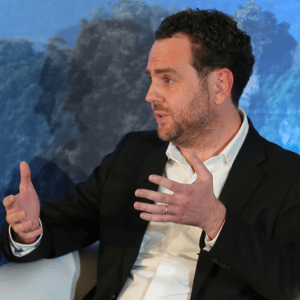
“They’re far too easy to set up shop and sell people’s data and get around protections that were designed to prevent a spruiking of financial products.”
A slido poll of the room – filled with researchers and asset consultants, and including researchers from licensees – deemed the licensee to be the party most responsible for the collapse of Shield and First Guardian, outside of the managers of the funds themselves, with a third of the room voting as such. Surprisingly, no one voted the regulator as being the most to blame, despite ASIC receiving very public criticism.
Insignia Financial still owns two salaried licensee channels, Bridges and Shadforth. While the group divested its self-employed licensee channels – now known as Rhombus Advisory – they still own a minority stake.
Hartley said there is no excuse for licensees to not be able to monitor all advisers in their network.
“We can oversee our guys because they’re salaried, but Rhombus which is a licensee of self-employed licensees has very good monitoring as well,” Hartley said. “Licensees can monitor advisers well, not all do.”
ASIC has alleged that InterPrac-licensed adviser Ferras Merhi had signed more than 6000 Statements of Advice in three years, which Hartley agreed should have been spotted in licensee compliance programs. “But a trustee should’ve seen that as well,” Hartley said.
Financial Advice Association Australia CEO Sarah Abood said the biggest issue from an advice perspective was the incentives involved for advisers to recommend the fund.
“How did we get 12,000 people from five advice firms?” Abood said.
“In terms of the incentives, part of the action that ASIC has taken against Ferris Merhi… one of those actions is on the basis of conflicted payments, which he has publicly acknowledged in a few forums, which surprised me a bit.”
Merhi has also been accused by the regulator of taking $19 million in payments from Shield and First Guardian to help market the funds.
“If that’s the case, that’s very clearly against the law,” Abood said, adding this has been the case since the commencement of the Future of Financial Advice reforms in 2013.
But for both funds to get onto platforms they needed a research report. Court documents in the suit against InterPrac show that a research report was all that was needed for approved product list inclusion.
SQM was the sole researcher that graded both funds and ASIC has taken them to court alleging they failed in their role as gatekeepers.
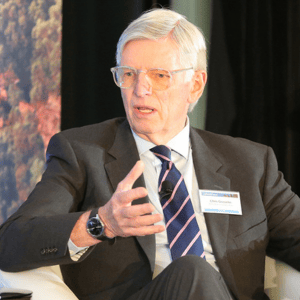
Australian Fund Monitors CEO Chris Gosselin said a system where product issuers pay for ratings or research is ultimately going to continue to lead to conflicts that will be pinpointed in a post-mortem assessment.
“Whilst you have that conflict, you have to question the independence of the research,” Gosselin said.
“Research has developed more and more as a marketing [tool] by fund managers and product issuers than [as] a hardcore look at some of the underlying products.”
Hartley agreed that product issuer paying for a product rating is “problematic”.
“Not quite sure how you solve for that, but it is a problem and it requires the research to be fiercely independent even though they’re paying for it, to the point of having the risk of not being paid for it,” Hartley said.
“Your integrity as independent researchers is your value and if you don’t do that it will destroy your value.
“Interestingly, SQM become very popular rating SMAs [separately managed accounts] because the other research houses conflicted themselves out of rating SMAs because – in their own words – they became fund managers. They wanted to have their own SMA and their own funds.”