

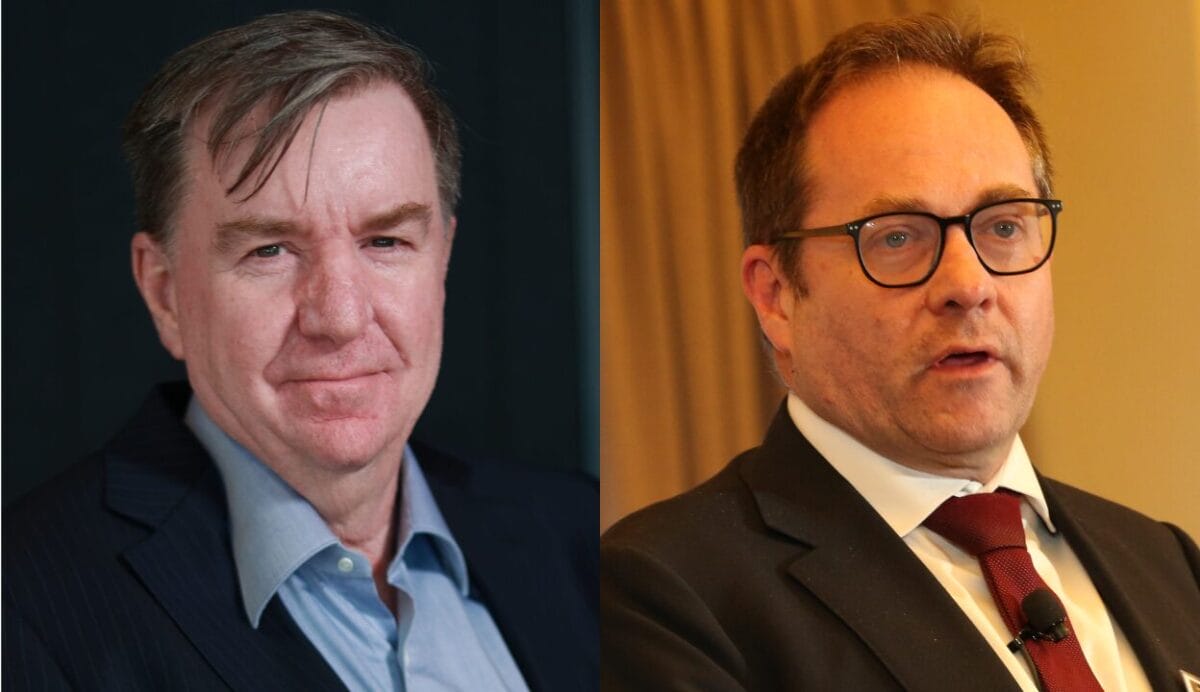

The owner of InterPrac Financial Planning’s calls for the government to remediate investors in the Shield and First Guardian master funds is a sick joke that seems to completely overlook its own conduct in the collapse.
A 13-page letter from ASX-listed Sequoia CEO Garry Crole to the government, regulators and, incongruously, an adviser association, and which has been confirmed by the company as being legitimate, can be summarised as a three-tier “InterPrac Solution” that doesn’t admit any culpability by the licensee.
Crole pulled out all the stops, addressing the letter not only Minister for Financial Services Daniel Mulino, but also Treasurer Jim Chalmers and Prime Minister Anthony Albanese.
The InterPrac “solution” is that APRA direct trustees to seek government assistance to remediate clients (activating Part 23 of the Superannuation Industry (Supervision) Act), or to rely on trustees tapping their operational risk reserves.
Nowhere in this 13-page manifesto does InterPrac acknowledge its role and responsibility, let alone pledge any capital to remediate clients for advice given by its authorised advisers. In fact it presents itself as a victim of the misconduct despite, as a licensee, having explicit responsibility for the advice provided by those advisers.
Instead, Crole’s strategy would ultimately penalise every super fund member either by needing to replenish the operational reserve or via the levy that would be used by the government as was the case when it bailed out Trio investors.
Based on Macquarie’s arrangement to remediate Shield investors and Netwealth’s official request for government assistance, any deal to utilise operational risk reserves or government assistance would only place clients back to their financial starting position, before they rolled over into either of the funds. This would still allow for an AFCA “but for” determination that could go in clients’ favour to additionally remediate them for lost investment returns due to poor advice.
As long as InterPrac doesn’t get shut down – as has been the case with every other licensee involved – Sequoia would have no option to pay an AFCA determination. It’s fair enough that it should be required to take some accountability for the actions of its authorised representatives, right?
Apparently, the company thinks differently. Instead, its letter suggests that Macquarie be required to use its operational risk reserves to cover 5 per cent per annum interest repayments for lost growth for members, as well as the already agreed $321 remediation.
Victims would be happy with this plan, after all it remediates them not only to the position they were in before they entered the funds with some return on investment, but it critically ignores the role poor advice played and InterPrac’s part of the collapse and gives them an easy out.
The industry has criticised ASIC for not acting soon enough, but InterPrac had oversight of the advice of its authroised representative Ferras Merhi, who it is alleged by ASIC gave Statements of Advice to 6000 clients in a three-year span. InterPrac didn’t step in to cease stop Merhi recommending Shield and First Guardian to more clients until December 2023, a detail it only revealed 18 months after it did so.
The latest Adviser Ratings data shows the average adviser has 131 clients, but Merhi is alleged to have been serving ten times that number, and no one at InterPrac who should have been monitoring his advice batted an eyelid.
Trustees also deserve scrutiny for their lack of due diligence in hosting the products and making requests to the government for a bail out. But they would not have been privy to the same massive red flags that InterPrac was with so many clients moved into these problematic products in such a short period.
“We as an AFSL represent affected members who in good faith invested in super funds whose trustees relied upon independently rated products under their APRA-regulated trustee’s licenses,” the InterPrac letter said.
There are plenty of advice representatives who will be quick to place the blame back onto product manufacturers, but the role of an adviser is to mitigate against product risk by constructing a diversified portfolio. The fact these affected clients were inadequately diversified is bad enough, but further allegations against Merhi show he was receiving millions from the funds for marketing funds he also recommended.
This wasn’t a group of unlucky advisers getting caught out by a product collapse. These were allegedly wilful participants in a brazen scheme, and all of this this happened under InterPrac’s watch.
In the letter, InterPrac shared five key points that “represent more than individual fund collapses” exposing weaknesses in:
- Due diligence processes by APRA-regulated trustees
- Ongoing monitoring obligations of approved investment options
- Responsible entity oversight and auditor independence
- Platform governance standards across the superannuation industry
- A regulator who elected not to share information of its concerns with stakeholders.
Not one of these points acknowledge its own failure to conduct proper oversight over its advisers, including InterPrac’s obligation to monitor adviser compliance to the Code of Ethics.
InterPrac can’t keep pointing to due diligence failures in the advice chain while continuing to ignore its own failings in the process. It’s completely disingenuous.















Everybody in this advice chain had a role.
Sadly, Interprac seem to be denying theirs, which should have been to overview the advice. Simply checking a sample of what Merhi and Co were producing would have identified the problems…
Single strategy to transfer funds…
Invest in a single investment, with no track record, and limited liquidity…
No future TTR Strategy potential?
Plus many other issues…
Even while Macquarie have remediated clients for (possibly) more than their share of the blame, the failure of “advice” was the responsibility of the Licensee, so please “man-up”.
The only cohort who didn’t know this was happening were good and honest financial advisers, who fund the Compensation Scheme of Last Resort!!!
I’ve got 6.000 SOA’s to write in the next 3 years. Can anyone suggest an appropriate licensee to oversee things? Preferably one that gets a % cut so that they get to share in my success as well.