
Alternatives have been a boon for Asian family offices chasing enhanced portfolio returns and diversification, but not everyone is ready to jump on board. According to global investment consultant Cambridge Associates, every family office is unique and their past experience within the asset class to some extent dictate their future commitments.
The firm, which has over US$600 billion ($917 billion) in assets under advisory and discretionary outsourced CIO mandates, counts family offices and foundations as close to quarter of its client composition.
It is one of the biggest wealth management players with four offices in Asia Pacific where the super-rich are pouring in. Its biggest regional base is in Singapore, which houses over 2000 single family offices at the end of 2024 including those of Bridgewater founder Ray Dalio and vacuum cleaner maker James Dyson, due to its favourable tax settings and robust financial system.
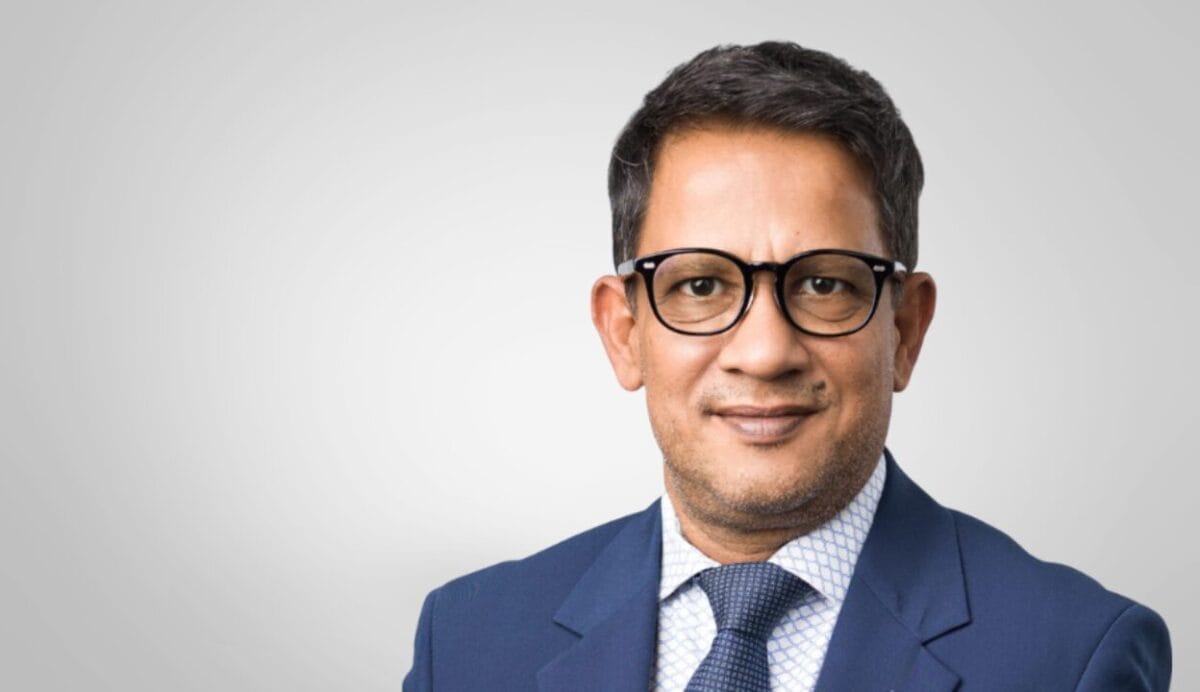
Prabhat Ojha, an outsourced CIO at Cambridge Associates and head of Asia client business, tells Professional Planner that the consultant usually receives asset class-based mandates from family offices and needs to respect their preferences when it comes to alternatives. The firm typically works with private clients with minimum US$125 million in assets.
“[Some] may understand private businesses, or they might have worked with a private equity manager or sold their business to a PE manager,” Ojha says in an interview from the firm’s Singapore office, noting that these clients tend to have an affinity for private investment.
“But if this family has been around for a couple of decades, they might have had a bad experience with alternatives. If you go back to 2007/2008 and 2005/2006… where initially the private asset classes showed up in Asia and were probably placed into the family office space – those were not good vintages.
“If you had gone in at that time based on your private bank’s recommendation, you would have had a bad experience… if you haven’t seen distributions, then that capital is locked up for 10, 12 years, and you’re seeing a 1.2 DPI (distribution to paid-in capital), then you might think ‘why did I bother?’”
APAC family offices tend to have lower allocation to alternatives (private equity, private credit and hedge funds) of around 30 per cent compared to its European and US peers, who can invest as much as 50 per cent of its assets in alternatives, according to a 2024 estimate by McKinsey, but it also noted that this is heavily dependent on the “archetype” of the investor.
In single family offices, those set up by young entrepreneurs could invest up to 100 per cent of its assets in alternatives featuring venture capital heavily, while traditional business owner family office may invest at little as 10 per cent in alternatives due to lower risk tolerance.
Private credit shines
For those who are looking to allocate towards alternatives, private credit is throwing up attractive opportunities as Ojha says direct lending and so-called speciality finance (or asset-backed lending) are two major recipients of client capital.
“[There is] a lot of competition there in the large-caps space, and therefore the deal terms that we are seeing are deteriorating,” he says.
“At the same time, this is where you compete with the public markets – high yield and bank syndicated loan markets – the borrower has the optionality, not you as the lender.
“We want to lean into the lower-middle market where the competition is lower, where the deals are smaller, where the manager can take the whole piece or be really responsible for structuring the deal and the covenants.”
Smaller deals with fewer lenders also mean faster recovery in the event of restructuring, as Ojha says a one-year delay could make a significant dent on the IRR. The firm defines lower middle market as companies with US$10 million to US$50 million of earnings before interest, taxes, depreciation, and amortisation (EBITDA), and core middle market as US$35 million to US$100 million EBITDA.
Cambridge Associates serves a variety of client sizes, and many are willing to allocate to smaller fund managers that may not move the needle for larger asset owners.
Should tariffs or other uncertainties translate to real trouble for corporate earnings and hit direct lending, speciality finance backed by hard assets such as aircraft and ship leases and commercial real estate also provides another layer of security.