
The Financial Services Council has recruited a trio of former Association of Superannuation Funds of Australia staffers as competition heats up to be seen as the $4 trillion super sector’s peak representative to Canberra.
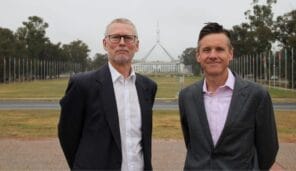
The FSC has established a so-called Superannuation Practitioners Group to provide regulatory guidance on superannuation issues, hiring technical super boffins Hans van Daatselaar, David Delaney and Spiros Koziaris to spearhead the initiative.
Van Daatselaar was a senior and high-profile executive at ASFA for close to a decade, serving as executive officer of ASP Services, the influential forum that oversees the SuperStream and Single Touch Payroll initiatives – critical pieces of shared operational infrastructure in the superannuation industry. Delaney, an IT and cybercrime expert, and Koziaris, have also previously been employed or contracted by ASFA for technical super and consulting services.
It is understood that the ASP initiatives will be retained by ASFA.
But the talent raid still raises a potential commercial challenge for ASFA, given the knowledge base of the ASP trio and given these services – and SuperStream in particular – are regularly listed by super funds as among the more valuable elements of ASFA membership.
It suggests the FSC is not at all squeamish about picking off talent from ASFA, given it recruited the association’s former commercial director of five years, Justine Earl-Smith, just eight months ago. She joined the FSC as executive director, commercial partnerships and growth, with a mandate to “elevate member engagement and drive growth.” according to a LinkedIn post by Earl-Smith at the time.
More broadly, though, it shows the FSC’s desire to muscle in more on the $4 trillion superannuation sector.
The FSC has long represented retail for-profit super funds alongside asset and wealth managers and life insurers (although the latter defected to found their own association in 2022).
But by launching a competitor to ASFA’s ASP Services it has sent a clear message that it wants to play a more systemic role as a provider of infrastructure to the wider industry. The FSC’s ambition was not so subtly on display in its decision to provide its upstart “SPG” service free of charge and not only to members but any and all super funds.
It is seemingly emboldened by the quiet but significant entry of two industry super funds – Brighter Super and CareSuper – to its membership in recent years. Both ended up there by accident, with Brighter Super inheriting the membership from its acquisition of parts of Suncorp’s former wealth business; and CareSuper inheriting theirs from MTAA Super.
Nonetheless, the decision of both funds not to relinquish the membership is noteworthy and has seemingly given the FSC confidence to step outside its traditional lanes.
Effectively, both associations are vying to be seen in Canberra as the “peak body” for superannuation, as distinct from a lobby group for a smaller segment or business model.
The Super Members Council for example – which was born out of the merger of Industry Super Australia (ISA) and the Australian Institute of Superannuation Trustees – is sophisticated and influential player in the policy sphere, but by definition is not a peak body for the broader industry since it restricts membership only to profit-to-member funds (including but not only industry funds – it’s complicated!) Likewise, the SMSF Association clearly cannot and does not purport to speak for the broader sector.
But both the FSC and ASFA face significant hurdles in becoming true peak bodies with industry-wide buy-in from super funds across business models and factions.
To many super funds, especially the former ISA members based in Melbourne, the FSC is seen as Sydney-centric and a bit right of centre politically (despite the Labor ties of its current CEO Blake Briggs).
Its long history of representation for for-profit retail funds – and the faint taint that still lingers from the Hayne royal commission’s excoriation of its membership, will be very hard to shift. Plus, at the same as it embarks on a super industry membership drive, it is also growing its footprint among advice licensees, some of whom have harbour acrimony towards industry funds given past public campaigning regarding the financial advice industry or more recent disagreements over the Delivering Better Financial Outcomes reforms.
On the flipside, it is seen as a highly effective political and media operator, which would be helpful for funds as they face mounting public and parliamentary scrutiny and given Treasury’s long legislative to-do list of relevance to super.
ASFA has long billed itself as the peak body for super, representing both sides of the so-called super wars. But the claim has been undermined by the dwindling number of retail funds counted among its membership, with mega-funds MLC and Colonial First State leaving ASFA’s membership in late 2023, citing concerns around meeting their best financial interests duty, as first reported by Professional Planner sister publication Investment Magazine.
In a climate in which the prudential regulator is scrutinising every dollar of expenditure, funds must be able to clearly justify the costs involved with being members of multiple organisations, which can run up to hundreds of thousands of dollars per year, depending on the size of the organisation. With the membership of ASFA and the SMC increasingly overlapping, this justification arguably becomes harder.
ASFA also took a reputation hit, along with SMC, for allegedly seeking to water down cybersecurity regulations, despite warnings from consumer advocacy groups and before a string of major cyber incidents affecting their members.
At the same time, ASFA’s willingness to take tough stands against what it sees as onerous or misguided regulation – such as the Your Future Your Super performance test and ASIC’s suspiciousness over private market allocations – may well earn the respect of members unable to push back publicly themselves.
And the association has also earned brownie points for trying to cultivate more public profile and enthusiasm for super among a notoriously disengaged public via the consumer press under its current CEO Mary Delahunty.
Perhaps the bigger problem for both, however, is that the industry is inherently tribal in its history and culture.
And while retail and industry funds arguably look less and less different – with more interpersonal ties between them – the super wars are still alive and well in corners of Parliament and the press, making it difficult for a true peak body to get through.
But with $4 trillion in assets in play for political representation, you can’t blame them for trying.