A new study released today by Real Insurance shows the true price of sending children to private schools, with four in five parents admitting to making significant financial sacrifices in order to meet rising fee demands.
The Real Insurance Australian Education Survey is the third instalment in a series of national studies to investigate the shifting values and concerns affecting Australian families.
For many Australian parents, the real or perceived value of a child’s private education has led to a very tangible impact on family finances, which are being juggled around to ensure private schooling is a goal within reach.
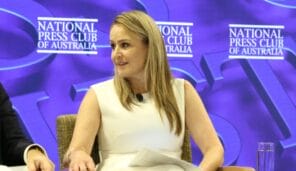
Head of Corporate Affairs and Real Insurance spokesperson Tatiana Day said, “The results shed light on a battle that a large number of Australian parents face every day, with one in three estimating that at least 20 percent of their household income is going towards their children’s private school fees.”
The main spending areas included cutting back on entertainment and dining out (50 percent), and cutting back on holidays (49 percent).
“In addition to these common money-savers, a considerable number of parents must take a more drastic approach. Almost one in three downscale their necessary home renovations or repairs and one in six work multiple jobs in order to finance their children’s private education,” said Mrs Day.
Another one in three parents have received financial assistance from family members to pay private school fees.
“Probing further into these findings, we wanted to examine the perceived value for parents in sending children to private schools, particularly in light of the financial and other sacrifices that affect the family unit,” said Mrs Day.
In terms of parents’ major drivers for sending a child to a private school, personal development and level of discipline rated highest (both at 69 percent), outstripping scholastic aspirations such as standard of education (66 percent) and academic results (55 percent).
“In a low-wage growth economy, the enduring emphasis placed on private education is such that one in three parents have needed to anticipate or make a decision about which child would be sent to a private school,” continued Mrs Day.
“While private education costs continue to rise, it is interesting to note that much of parents’ value assessment of the private school sector lies outside the realm of academic achievement,” said Mrs Day.
The research also challenges perceived notions of elitism in terms of private schools giving students a financial ‘leg up’ later in life. In fact, parents who attended a private school themselves said it had helped them with their social network and financial position the least (both at 22 percent), well behind values, morals and character (51 percent).
Comparatively, respondents who attended a public school themselves also rated their financial position the lowest (19 percent), suggesting that an individual’s financial position later in life is not correlated with the type of school they attended – at least in terms of perception.
In addition, almost all parents who attended public schools said their school helped them better prepare for life after year 12 (89 percent).
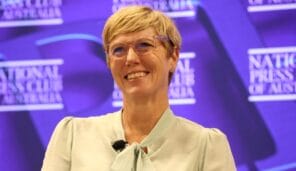
Dr Karen Phillip, one of Australia’s leading family and parenting experts, said, “The research findings add weight to a noticeable trend away from the traditional stereotypes of independent and government schools. We’ve seen a steady shift towards independent schools as more parents feel they are able to make a choice about where their children attend school, albeit not without sacrifice.”
“This shift has also seen both sectors enrolling students from diverse social, economic and cultural backgrounds. There are also selective public schools with rich and varied curricular and co-curricular activities and advanced facilities,” said Dr Phillip.
Despite contemporary developments, the largest disagreement between parents of private or public school children involves a longstanding perception of government schools. When asked if this sector is more representative of local communities, so students are more likely to value inclusiveness and be supportive of others, 48 percent of private school parents agreed, while a sizeable 77 percent of public school parents agreed.
Ultimately, the findings indicate that three in five parents of both public and private school children agree that each category has improved over the past 30 years.
“A key takeout from the research is that traditional stereotypes of both systems are not necessarily an accurate representation of the values Australian parents place on their children’s schooling,” concluded Mrs Day.