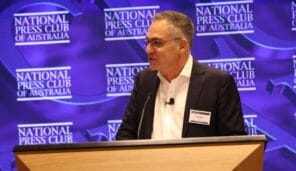
The $1.6 million superannuation savings cap set by the Government should be at least doubled, according to an analysis by Dr Ron Bewley, former Head of the School of Economics at the University of New South Wales.
In his second report examining the effect of the Government’s superannuation policy, Dr Bewley concludes that around $3.2 million is necessary to achieve a retirement income of around four times the Age Pension – the benchmark set by the Treasurer in the budget.
And well over $3 million is necessary to give similar comfort to that which politicians, public servants and others enjoy on an income of $100,000 from a defined benefits pension scheme.
Dr Bewley used life expectancy tables published by the Australian Bureau of Statistics and ASIC’s Moneysmart capital guaranteed indicator to work out how much superannuation people need to support themselves independently without having to resort to the Age Pension. These tables forecast average life expectancy so people have a 50% chance of living longer.
Dr Bewley notes that even an account balance of $3.2 million is not enough to ensure that everybody is able to make their super savings last for the whole of their lives. For example, for a woman who retires at 60 with $2 million in her pension account there is a 50% chance that she will run out at 85, two years earlier than the life expectancy of 87 that she had at age 60.
However, if she reaches 85, she then has an expected life span of another 7 years – that is, she has a 50% chance of living more than 7 years after her superannuation savings have run out.
She would then have to rely on the taxpayer for her living expenses and care.
Dr Bewley’s analysis is based on a conservative asset allocation. He warns that to guard against running out of funds too soon, people may invest in riskier investment options which do increase the chance of not outliving their pensions but also increase the risk of running out at an earlier age.
A much higher cap will allow most people to have enough to live off their super savings without having to go on the age pension and become a burden to taxpayers. The paper notes that if people die with some superannuation savings intact, the Government collects tax from the residual if it goes to someone who is not a dependent (e.g. non-dependent children and family members). If it goes to a surviving spouse, that is not much different in principle from the benefits that spouse would get from a defined benefits fund.
Dr Bewley’s paper: “So how much should the superannuation cap be?” accompanies this media release and can also be found on the SMSF Owners’ website.
The Chairman of the SMSF Owners’ Alliance, Bruce Foy, says Dr Bewley’s analysis clearly shows that the Government has seriously under-estimated the adequacy of a $1.6 million super savings cap.
He says the basis on which the Government believes a retirement savings balance of $1.6 million is an adequate benchmark needs to be reviewed by an independent panel.