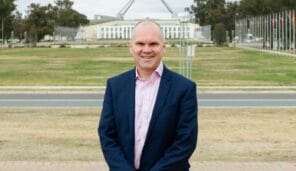

Six years ago, The Retirement Advice Centre’s David Reed noticed something bizarre happening with his clients: they were too scared to retire.
It was in the early years after the global financial crisis, and though they’d weathered the crisis well and had reached their financial goal they weren’t willing to give up work.
It was this that led Reed, who was the AFA (Association of Financial Advisers) Adviser of the Year 2015, to a huge business pivot from running a broad financial practice to focusing on pre-retirees and retirees. He changed the name of the practice in 2013.
Reed says, “A concreter summed it up best. He said, ‘I’m scared that tomorrow I’ll sit on the couch watching Days of our Lives and it will kill me. It’s not something I want to do’.”
Another client, retired for four years, said the process was miserable. The first day of retirement he’d woken up relaxed at 11am, but by 1pm the guilt had sunk in and he wasn’t able to shake it for another 18 months.
Reed works by the simple maxim that clients are better off having come for advice, and he felt that focusing simply on the financial elements was not really helping.
“If clients aren’t happy with say, $1 million, what’s next?” he says.
“Do we shoot for $2 million? But we realised in returns alone there wasn’t a happy retirement outcome for all clients.
“What I saw in 2010 in particular was a number of pre-retirees that had the magic number of retirement savings and wouldn’t retire. The more we dealt with that, we realised it was a really significant problem that isn’t getting highlighted enough.”
His change of tack wasn’t just to focus on retirees. Reed looked deeper into the retirement process, writing two books with retirement psychologist Barry LaValley.
It is this approach that truly differentiates his mindset as a planner – he sees beyond the money to a holistic approach.
“People have the most financial resources at that point of life and they are not sure what to do with it to keep their life meaningful,” he says.
“We’ve narrowed this to a point of life where males over 65 commit suicide more than teenagers.
“People over 50 and married 30 years or more [are] divorcing, and are the only demographic where the rate is growing in the US. In the UK it’s tripled, and in Australia it’s gone through the roof as well.”
Now Reed is running retirement coaching classes. He believes many people approaching retirement need to understand what that word means to them, before they can address the financial aspects.
He also takes into account the emotional needs of a client, as many retirees look for security beyond chasing a “golden egg”.
“We build a minimum income unrelated to market activity so our clients can turn on the television and see the news with the security that their income is safe no matter what headlines they see,” he says.
It’s not just his clients’ future he’s concerned about. Reed believes in actively giving back to the profession and is mentoring two junior advisers as well as a university student.
“I know it’s how I started, and there’s a lot of focus on education requirements at the moment. I think it’s important to not downplay the importance of experience and practicality of advice,” he says.
“It’s a case of having a strong client relationship experience; and that’s one of the core goals we are trying to drive, understanding their emotion. While we can read about that, it can only really be gained [as] an experienced adviser.”