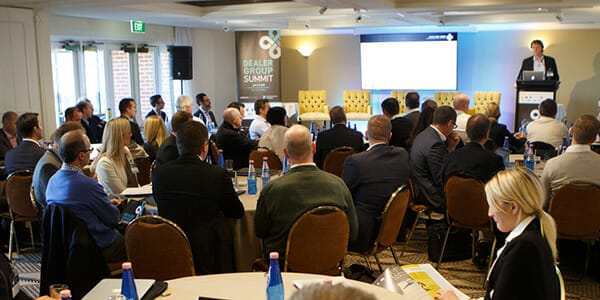

The current pace of regulatory change will undoubtedly force some advisers out of the business, but that is not necessarily a bad thing if it allows advice offerings to evolve and expands the role of the financial planner, the Professional Planner Dealer Group Summit has heard.
Of more concern to the dealer groups and licensees at the Summit, held last week in the Blue Mountains west of Sydney, was where new advisers would come from, and what skills they would need to have as advice businesses and offerings evolve.
“There’s some good and some bad elements to the change,” the Summit heard, in a session summarising a series of earlier small-group discussions.
“Clearly there are groups of advisers…who are probably quite overwhelmed by the magnitude and the quick succession in which the change is landing, around Trowbridge and education standards, and perhaps they’re not landing as clearly or as quickly on what those pathways might be to get them from where they are to where they need to be,” it heard.
“And some of those pathways will probably be out of the industry. In some instances that will probably be OK.
“As the changes come through there will be people that leave the industry; there will be people who will probably emotionally leave but perhaps not physically leave, and that’s probably the worst type of adaptation to the change. We sometimes joke about the advisers who have retired but forgotten to tell anybody, but some of that will transpire through the change. They will try to ignore the shifts.”
Substantial optimism
The Summit heard there is substantial optimism among licensees about the calibre and quality of potential new entrants to the financial planning business.
“And importantly [with] some of the new types of advisers who are coming through, perhaps our traditional lens on what an adviser is and the role they play is changing, has changed,” it heard.
“Probably we worry too much about where advisers are coming from and where are they going to; [the bigger issue] is what are those different capability sets.”
The Summit heard that technology will play a role in enabling financial planners, and while consumer-accessible robo advice is interesting, the real story will be “the opportunity for advisers to use technology that allows them to give advice to more and more clients”.
“Whether or not clients or prospective clients choose to self-advise through technology is less interesting than the efficiency gains and the client experience that advisers can and will offer through technology tools, and through being able to provide phone-based advice, and other things,” the Summit heard.
“When you think about that, there may be new breeds of people coming through, people who do not necessarily aspire to provide face-to-face advice in some of the traditional models that we have.
“The pool you can draw from to find those kind of people is a lot broader.
“There’s a lot of developments that we should think about. But the focus on what the customer wants is going to be really clear, so how do we shift the focus away from advisers coming and going [to] what people are looking for, and how do we meet those needs?”
Probably going to fracture more
The Summit heard that the financial planning industry “isn’t homogenous and it’s probably going to fracture more”.
“There are strong views about moves away from institutions, but also perhaps moves towards institutions – does it really matter – the issue is how accessible is advice, and can people get their hands on it, and at what cost?” the Summit heard.
“The current regulatory framework assumes the traditional advice model is in place, so we’re going to have to continue to work pretty hard to evolve tools and capabilities around emerging advice models, and not be trapped in just trying to process the regulatory framework into our existing models.”