
Investment advice is developing in two distinct directions: on the one hand into a “latest hot-sector” approach; and on the other into more rounded “professional” wealth advice, according to Jonathan Ramsay and Fil Andronaco, co-founders of the portfolio construction and consulting business InvestSense.
Ramsay, Andronaco and a third former van Eyk Research consultant and InvestSense co-founder, Jonathan Tolub, this week published a new quarterly asset allocation report to support advisers who want to take the latter path.
The ValueSense Report (VSR), published quarterly by InvestSense, aims to put into advisers’ hands the information they need to help filter out the noise and distractions that often hinder sensible investment decisions.
“The role of the adviser is changing, and you’ve got this cast middle ground of people who weren’t exactly selling products – OK, a lot of them were – and they’re trying to shift from that; and to some extent there will be transactional models, low-touch advice,” Ramsay says.
Ramsay says VSR provides advisers with what they need to help explain to clients why it may from time to time be better to take a contrarian stance: not capitulating when markets have crashed; and when to avoid asset classes that are overvalued.
“The opportunity for advisers is to become a genuinely well informed, professional wealth adviser. We think being on top of this stuff is an opportunity for those guys.
“There’s a type of adviser that is probably a little bit disenfranchised with having to peddle the latest superstar fund manager story, the latest hot-sector thing that gets the client’s interest, and they deep down know that they’re on a bit of a merry-go-round.”
Part of an ecosystem
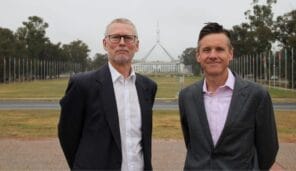
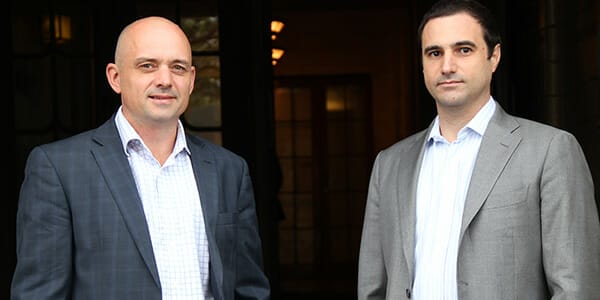
Ramsay (on the left in the picture) says the quarterly report is only one part of an “ecosystem” that InvestSense has created to support advisers.
“We try to set up a communication channel that goes straight through, with a coherent narrative, between the portfolios we build, the material we provide them, and the material we provide them to give to their clients. And it’s all forward-looking,” Ramsay says.
Ramsay says VSR is “the backbone, the bible, the thing they can delve into as much as they want to get comfort about how to substantiate it”.
“[We are] trying to create a coherent linkage between what is happening in the portfolios, having very well-informed advisers who don’t feel the need to hire and fire [managers] and realise that’s a bit of a merry-go-round and not [always] in the best interests of the client,” he says.
“But what they can do is have someone like us providing the portfolio, the collateral, the narrative, and being able to help the client better understand what’s been going on in the portfolio.”
Helping advisers communicate
Andronaco says the experience of the InvestSense founders convinces him that “I don’t think there’s anyone who provides what we hope to do”.
“In the case of a market event where a client walks in the door and says I want to sell all my stocks, there’s nothing really that helps that adviser communicate well, really you should be doing [something else] and this is why,” Andronaco says.
“We hope this does that, because this thing is anchored in valuation. That’s the core of what we do; that medium and then shorter-term stuff comes after the valuation effect. What the valuation will tell us [is] this is the worst time to do that; here’s the evidence why; and we hope it provides a communication tool…for an adviser to say this is the logical course of action you should take.”
Ramsay says a focus on valuations creates a “a non-past-performance view, and a reasonable basis for every investment decision you make, that you can point to … if ASIC comes in one day and says why did you do that?”
“[You can say] because these guys said this, this, this,” he says. “And it wasn’t just because they said it; they said it on this basis.”