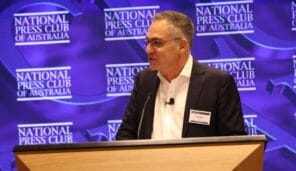

Financial planners have traditionally under-served retiree clients who have moved from accumulation into the draw-down phase, according to David Wright, managing partner, Zenith Investment Partners.
“As an industry we really haven’t done too much different until the last couple of years, in customising either product or portfolio solutions specifically for retirement clients as opposed to accumulation clients. The risk profiling has been fairly consistent, as have the portfolios, perhaps with the exception of say including a cash bucket,” Wright told attendees at an FPA adviser event on Wednesday.
However, he also acknowledged the widespread availability of tools such as product solutions and portfolio construction approaches has only peaked within the last six years or so.
Wright said that ensuring clients’ retirement savings at the very least keep pace with inflation is a crucial role of financial planners: “They need insurance that their nest egg is going to last their life time.”
He also referred to the ongoing importance of structuring clients’ financial affairs so clients remain eligible for at least partial amounts of the aged pension, with a strong attachment to the pension persisting among retirees.
Outlining the core risks retiree clients face, Wright listed four areas, with some specific to this client segments and some also experienced by those in accumulation phase and others. These are longevity, investment market risk and sequencing risk.
Longevity has become a hot button topic due to a confluence of factors including improvements in healthcare and medical treatments and lifestyle changes. While planners need to remain aware of the issues around longevity, and educate their clients, “It remains a difficult area for financial planners to solve, given the high variability,” Wright says.
Investment market risk is one common to clients of all types, but retiree clients in drawdown phase have specific considerations, given their requirement for low volatility.
Discussing sequencing risk, Wright believes that while the term has become a popular buzzword in recent years, it’s still not adequately addressed by financial planners or explained to clients properly.
“The industry really hasn’t dealt with that very well at all for retiree clients, who all too often just get the lump sum and invest it.
“Retiree clients that entered the market pre-GFC will, for the most part, never recover their capital. Whilst we’ve never done it very well as an industry, we know that any credible source will tell you that you can reduce risk by averaging over a period of time, but we don’t do that generally because it’s an administrative headache…we don’t want the client going off and spending the money on other things,” Wright said.
In terms of adopting new approaches to advising retiree clients, Wright urged caution from financial planners. While he believes there are a number of areas where improvements can be made, careful attention must be paid to considerations such as the compliance regime.
“There’s no point going out there developing a really evolutionary approach to retirement planning…because it’s not going to meet with the compliance and professional indemnity requirements that the industry operates under. We’ve had to develop an approach that meets those requirements,” Wright said.
He highlighted capital protection as a particularly important consideration for financial planners advising retiree clients.
“Greater than 20 per cent drawdown on capital is past the threshold of pain…you want to avoid that at all costs. Because one of the critical aspects in that asset liability equation is that the client stays the distance.
“If they’re jumping out at precisely the wrong time for emotional reasons, then again, often they’ll never recover,” he said.
In terms of the investment tools advisers can use, Wright suggests those that are low volatility including long-short funds, non-discretionary alternative funds, and multi-asset real return funds.
“As an industry, we’re comfortable with long-short, and yet we see very little use of this [for retirees],” Wright said.
“For the first time in 15 years, institutional investors are looking to managers for multi-asset alternatives…we’re starting to see those types of products come to the retail space.”