
Superannuation is often examined from the perspective of clients in the accumulation stage of their financial lifecycle, but not often enough from the perspective of the retirement or draw-down phase, where their concerns and risks are quite different, according to Daniel Farley, chief investment officer – investment solutions, State Street Global Advisors.
These concerns and risks include longevity, inflation and wealth preservation.
“Managing inflation risk is probably the biggest risk retirees have,” Farley told the 2015 Post Retirement Conference.
He referred to some of the work done in the US in recent years, to give a global perspective to the Australian situation. In the US, the Department of Labor looked at how to manage longevity risk through a “safe harbour” ruling for annuities in 401(k) plans.
Farley said understanding exactly what clients want when they reach retirement is very important. He referred to a State Street survey conducted in the US and Europe, which found 55 per cent of clients identify security of income as more important than liquidity.
“Being investment managers, we often think liquidity is more important than it really is to clients,” he said.
Another study looked at client comprehension of longevity risk. This found that respondents tend to over-estimate how many people will die between the ages of 65 and 70 and under-estimate how many will live into their 80s.
Farley referred to the example of his own father-in-law: “For me it’s called ‘basement risk’ – I don’t want him to have to move into my basement.”
Two main streams
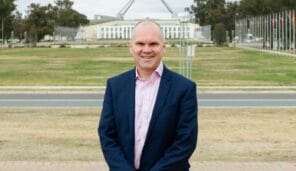
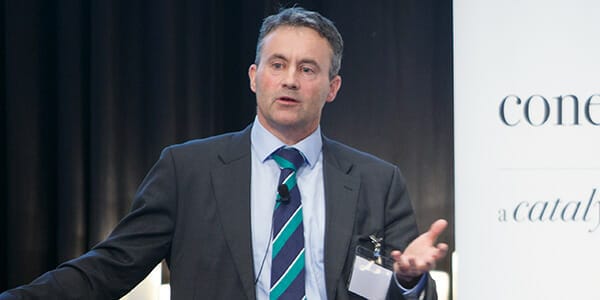
David Shirlow (pictured), executive director, Macquarie Bank looks at the Australian super system as having two main policy streams: superannuation tax savings and retirement income streams.
“In the 1980s and 1990s, the seeds were sown in Australia for one of the best [retirement funding] systems in the world,” Shirlow said.
Regarding the government’s latest Intergenerational Report, Shirlow asked “why has superannuation become a political football?” He referred to demographics that show the rising age of Australia’s population, pointing out these have been known for a long time.
One of the issues that needs to be addressed by the government is people spending their retirement savings too quickly. Shirlow said this will be addressed by the upcoming tax whitepaper, including the availability of deferred annuities that allow money to be drawn down in instalments instead of lump sumps.
Speaking about superannuation product, Shirlow said: “I think government will reject calls to make longevity products compulsory.”
“The government’s key role is not in overseeing the product side of the sector, but in tailoring means testing.”
He said financial planners play a role in increasing the amount of sophisticated thinking around these ideas.
Farley echoed these thoughts, mentioning the ongoing trust problem face by advisers.
“For retirees, how do we in the industry get their trust back?” he said.
Asked about the complexity of Australia’s system versus others around the world, Farley said he believes it is more complicated, but that it also provides greater affordability, giving people choices they don’t have in other systems.