
Retirement is a major milestone in people’s lives. It is increasingly becoming a major focus for financial planners as the “grey tsunami” results in 1000 people a week turning age 65.
Clients tend to be more concerned about generating a secure and growing income in retirement and are less interested in outperforming financial indices.
The key issues in retirement that are front-of-mind for clients are described in the diagram below (click to enlarge):
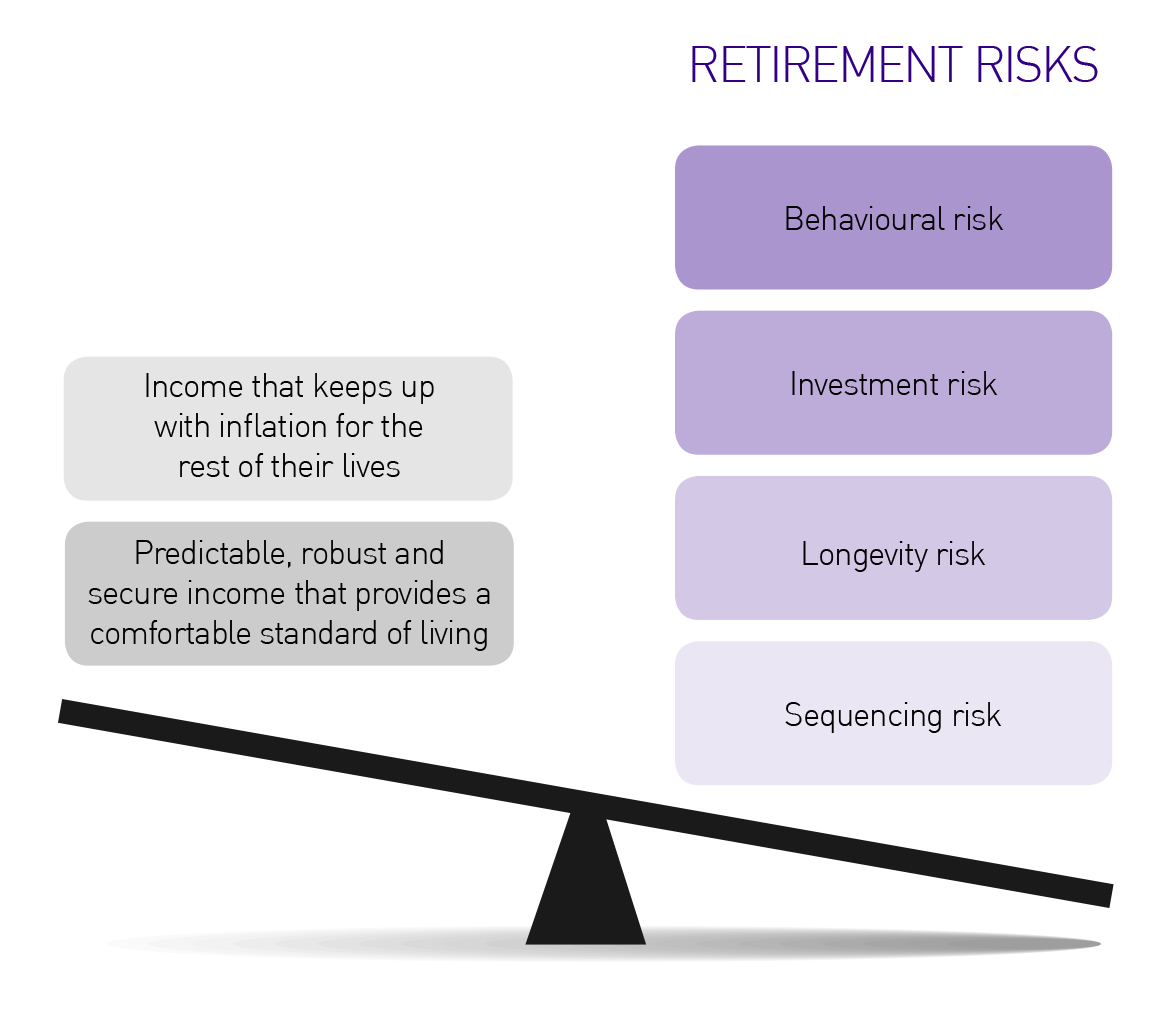
Financial planners need to shift towards delivering tailored retirement strategies for clients. There is unlikely to be a “standard” solution for all clients. Rather, it is a matter of balancing conflicting retirement issues to deliver a series of strategies that address the issues (listed in the diagram), as they apply to the client’s individual situation.
The recent financial market turmoil – including the global financial crisis (GFC) and European debt crisis – demonstrates how a client’s retirement plans can come unstuck in periods of market downturn. These events also illustrate the complex interaction between these various retirement risks. The sequencing risk (experiencing a period of unfavourable returns at the wrong time) is a form of investment risk that can have a negative effect on the client’s longevity risk (that is, the risk that the client will outlive their funds).
This in turn increases the behavioural risk that clients will change their investment portfolio due to emotions of panic and fear.
Advisers need to take these issues into account 10 to 15 years before retirement and plan for an investment horizon of 30 years plus in retirement.
Strategies to address key retirement issues
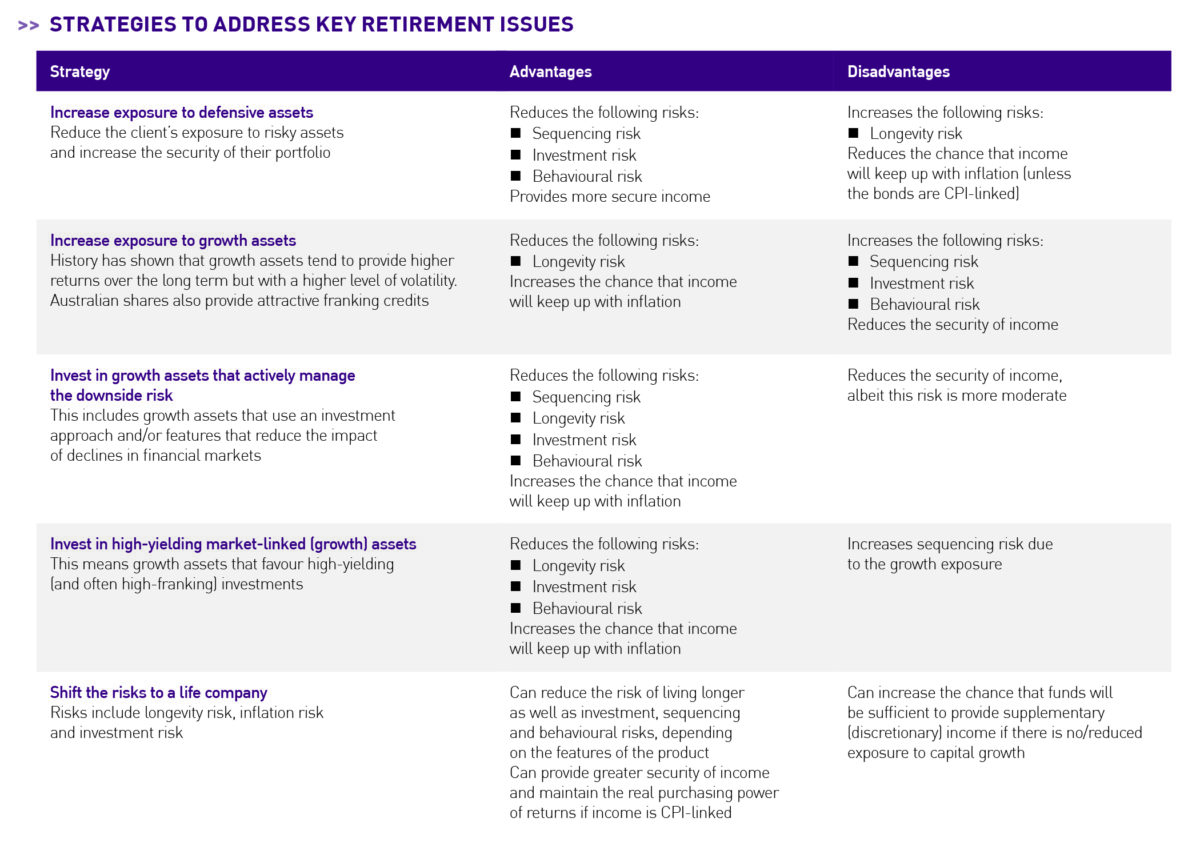
There is a range of strategies to manage the key retirement issues as they apply to an individual client’s circumstances. Some of these strategies and their advantages and disadvantages are described in the table below. (Click to enlarge).
Advisers need to consider the specific features, benefits and disadvantages of each retirement product and strategy, in relation to how these satisfy the client’s specific objectives and needs, in order to deliver a tailored outcome.