
Having the privilege of working as a journalist can often bring you into unexpected contact with surprising people. On the face of it, these people have nothing at all to do with your day-to-day job. But listen to what they do, and the reasons they do it, and you can just as often get a useful perspective and a reminder you of your own motivations for doing what you do.
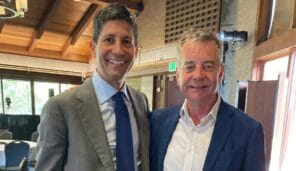
Last week the executive chairman of the sports clothing company, Skins, dropped into the Professional Planner office. Jaimie Fuller is an Australian guy living in Switzerland, from where he oversees Skins’ global business. He has about 80 employees and generates revenue approaching $50 million a year.
There is no obvious connection between Skins and Conexus Financial, the publisher of Professional Planner, but bear with me. Like many businesses, Conexus has a mission statement. Ours is to be “a catalyst for a more informed world”. It doesn’t mean much to anyone outside the business, and indeed, we don’t often mention it outside the business, but that’s not the point. It’s a reminder that by promoting the ideals of higher education and ethical standards and professionalism for financial planners, and raising the quality and accessibility of financial advice for all Australians, more people will have a chance at achieving financial security and a dignified retirement.
What’s the link?
The link between Skins and Conexus is Sharan Burrow, general secretary of the International Trade Union Confederation (ITUC). In this role, Burrow is vitally interested in how global capital is invested to improve the pay and conditions of workers around the world. She has appeared at a number of Conexus events in Australia and overseas as a presenter and speaker.
(In another connection, director of ITUC’s economic and social policy, Alison Tate, is sister of Conexus chief executive Colin Tate.)
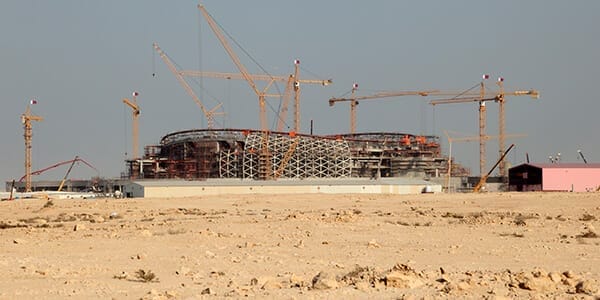
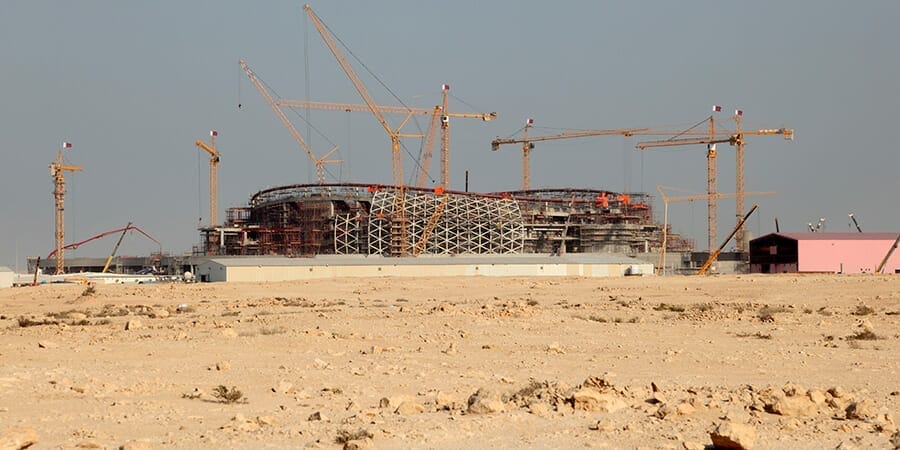
Burrow met Fuller after he started campaigns to clean up corruption in global sporting organisations – including the UCI (cycling) and FIFA (football) – and started to focus on improving the conditions, which might generously be described as slave-like, of workers in Qatar as that country prepares for the 2022 World Cup.
Burrow suggested Fuller make contact with Conexus Financial. As a catalyst for a more informed world, one of the things we’re good at is putting the right people together at the right time, and then standing back and watching the magic that happens. Burrow thought there might be something we could do to put Fuller in touch with people who can help him.
And so last week Fuller spent an hour outlining the work he’s doing – quite apart from running Skins – to address homophobia and discrimination against the LGBTI community in local sport, and what he’s also doing on a global stage to take a stand against corruption.
These are not trivial issues and Fuller believes sport is an effective platform from which to address them.
Skins is backing the Pride in Diversity program, featuring a range of high-profile sportspeople from football, AFL, ruby league, rugby union, netball and surfing, which manifests itself in Rainbow Laces – literally, rainbow-coloured shoelaces (or rainbow-coloured leg ropes, if you’re a surfer). If you wear the laces or use the leg rope it signifies you support the Pride in Diversity initiative.
It’s a powerful message to send to anyone who has held back from participating in sport for fear of being ostracised or discriminated against. It says: Come play with us. We’re on your side.
The laces cost nothing and can be ordered from a website.
Massive undertaking
Fuller’s campaign to clear out corruption in global sporting bodies and improve Qatar workers’ rights is a massive undertaking. There’s an estimated two million foreign workers in the country creating the infrastructure for the 2022 tournament and they come from some of the most impoverished nations on earth. They are lured by the prospect of making, by their own standards, good money and supporting their families.
But they quickly find themselves in horrendous conditions, unable to leave (they have their passports taken away), and living and working in the worst imaginable conditions. Fuller says that already 1000 have lost their lives and it is estimated that by the time the world cup begins another 3000 will have perished. Fuller has visited workers’ camps and tells some gruesome stories.
This would be unacceptable anywhere in the world; the fact that it’s happening, right now, in one of the wealthiest nations on earth simply beggars belief. But staging a world cup represents the point of a pyramid built on bribery and corruption, involving hundreds of millions of dollars and extremely powerful vested interests. In that sort of climate, what’s a few lives?
His campaign has understandably put him offside with some powerful and influential people. Undeterred, he pressed on and found allies among some of the world’s largest corporations and sponsors of global sport. When tackling FIFA, Fuller found support from Coca Cola; there then followed support from Visa and McDonald’s. Hitting the soft underbelly of the sporting authorities has proven to be a successful strategy and one he’ll continue to pursue, although Fuller is not oblivious to the sheer scale of the task.
What’s next?
Exactly what will happen from here is not clear, but something is moving. Fuller is about creating a better world. He describes it as changing the world through sport.
He is not an unambitious individual, and he’s passionate about what he does. He is, in a very tangible and meaningful way, seeking to be a catalyst for a better world.
His projects resonate with me for that reason, and are a powerful reminder that those who are in a position to make things better for others have a clear and unambiguous responsibility to do just that.
They might resonate with you for the same reason, or for the fact that he is, like you as financial planner, simply driven to help improve the lives of others.