
A report by Mercer and the CFA Institute has underlined the increasingly important role that financial planning and advice plays in developing best practice in retirement systems around the world.
The report, An ideal retirement system, contains 10 principles for both developed and emerging retirement systems (see box). The principles are designed to guide CFA members in responding to government policy and encouraging best practice as pension systems develop and grow.
The report was originally published in March this year but is being “released” today by the CFA Institute ahead of its annual conference next week.
The role of advice is not addressed explicitly in the principles, but it is implicit in a number of them, and Dr David Knox, a senior partner with Mercer, says it is “a fair call and a fair summary” to say efficient and cost-effective access to financial planning and advice is integral to an “ideal” system.
“We also need to recognise that at retirement there is not a silver bullet, and not everybody is in the same situation,” Knox says.
“People with $50,000 will need different sorts of advice to someone with $1 million. We will get a range of forms of advice, from robo-advice through to web-based calculators, through to helplines, through to face-to-face meetings. There’s not one answer.
“But coming back to the objectives of the system, you say the objectives are to provide retirement income for the rest of your life; therefore you have an income focus; but you’ve got some flexibility there because you’ve still got some capital needs – where does advice fit in, and how can it be efficiently provided, and cost-effectively?”
Deabte not always constructive
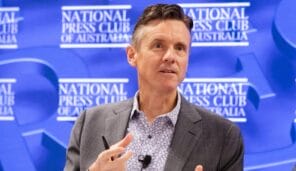
Anthony Serhan, president of CFA Society of Sydney, says the debate through recent regulatory reforms about the role advice plays in a broader context was not always constructive.
“There should be an open discussion about the value advice has, and the fact that there is a cost of advice, and that cost of advice is OK,” Serhan says.
“The process we’ve been through, I think we’re still going to end up at that point, but there are elements of the debate that I don’t think were constructive.
“A lot of the debate focused on the cost and didn’t have any discussion about benefits, or didn’t actually recognise that there was a benefit attached to this, and that those benefits go well beyond pure product advice.”
Knox agrees. “We’ve had a focus on cost, but what we should be focusing on is outcomes to the retiree,” he says.
“Those outcomes include advice, getting the best benefits, getting the most appropriate investment strategy, et cetera, et cetera. If we really focus on costs we run the anger of everyone moving to he lowest common denominator, if you like, and not necessarily delivering the best product.”
Important role for advice
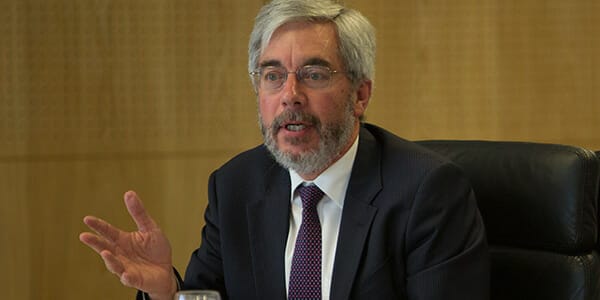
Knox says Principle 1 – addressing ‘clear objectives’ for each pillar within a retirement system – implies an important role for advice.
“In the Australian system we have the age pension, compulsory SG [superannuation guarantee], voluntary super and savings outside super, including the family home,” he says.
“So how does all that integrate? What is the purpose of each pillar? And how do people at different income levels, if you like, work within each pillar?
“The Murray inquiry, the FSI [Financial System Inquiry], suggested we should have very clear objectives for super. We’ve gone further than that, and said you actually need clear objectives for every component of the retirement structure, and the integration thereof. That’s one of the places where financial advice fits in.
“In some countries it’s much more social-security-based, if you like – very little advice may be needed: you might have some savings; social security comes along; you retire; the government pays you a pension; end of story.
“In the Australian system, as you know well, we’ve moved away from defined benefit pensions into defined contribution; in fact, I would say we’re the most developed DC market in the world, so financial advice for significant super balances or pension balances is not as well developed in many markets as it is in Australia.”
Cost-effective and attractive defaults
Knox says the role of advice is also integral to Principle 3, which addresses is “cost-effective and attractive default arrangements”.
“Within the Australian environment we’ve got MySuper, and that’s OK as far as it goes, up to retirement,” Knox says.
“But we don’t have any default post-retirement and therefore we’ve got this gaping hole: what do I do with my money? What product should I invest in? How should I invest?
“The role of advice can well and truly fit into those default arrangements, once we have clarified what they are and where default fit into the objectives of each pillar.
“Pensions and annuities are not common in Australia; account-based pensions are the most popular product, as you know well; but we need to help people make sure they take on board the most appropriate investment strategies. We would certainly strongly endorse the Murray Inquiry’s recommendation of a CIPA – a comprehensive income product – and I think that should develop into at least a soft form of default so if members don’t do anything they are at least moved into some form of income orientated product, but with some flexibility.”
Serhan says that another point to consider is that about 50 per cent of people retire on a full pension, 30 per cent retire on a part-pension, and 20 per cent retire fully self-funded.
“When you think about advice, advice isn’t about one solution,” Serhan says.
“It is about multiple solutions for multiple segments, and it still comes back to that idea of defining the objectives and identifying those different cohorts. Different solutions are going to be appropriate and different price points are going to be appropriate.”
Making advice more available

Serhan says there is “still a lot of work that needs to be done” around making advice available to more fund members.
“I think we complicate a lot of the calculators and the information we put out there; and we probably need to reframe a lot of that in a way to make it a simpler process and a more accessible process for individuals,” he says.
The starting point for developing the idea of an “ideal” retirement system came from Mercer’s earlier work developing the Melbourne Mercer Global Pension Index. The index covers 25 pension systems and ranks them against each other. CFA Institute approached Mercer to extend the concept.
“You’ve got some countries up the top, you’ve got some countries down the bottom, what are some of the principles that can form part of the framework that the CFA is talking about?” Knox says.
“We drew from that experience, and working with the CFA, these 10 principles. Some of them Australia does quite well; in some cases – for example, objectives and income focus – we don’t do so well.
“There are some countries that are still emerging – China or India or Brazil, for instance – and we think that these principles provide a roadmap for these emerging economies. They might take it one at a time. If you take the last [principle], of ‘appropriate regulation’, Australia does have good regulators in APRA and ASIC who are well respected on the world scene.
“If you’re going to develop a pension system in an emerging economy what you really need to do is understand what the objectives are, what are you trying to do, and make sure the regulator is in place and has got the appropriate resources. Once you’ve got those two things in place, then you can work on the other eight principles one at a time, two at a time, in whatever order is appropriate. But this is really a roadmap.”
Codes and standards for CFA Institute members
Serhan says the 10 retirement system principles form part of a range of codes and standards for CFA Institute members around the world.
“We’ve got any number of codes and standards that we put out here,” he says.
“As charter holders we have our annual set of codes that we sign up to as individuals. We have established codes for asset management companies, for trustees of superannuation funds. I think we use these 10 principles, in a way, as a set of codes by which we can in each market that we operate test policy positions hat have been taken. It’s a framework and set of standards that helps inform individual policy positions.
“For example, if we’re going to take an advocacy position on a particular change, we would say how does that change sit against these 10 areas or guidelines that have been established?”
Serhan says from the CFA Institute regards development of global pension systems as “incredibly important in the way capital markets are going to form and operate in future”.
“That’s another reason why we are very interested in progressing this discussion,” he says.
“If we take Australia for example, the retirement pool is already over 100 per cent of our gross domestic product, and larger than the Australian sharemarket. The way that retirement assets are accumulated and invested has a direct impact on the way our economy is funded through equity markets and bond markets.
“That savings pool coming under pressure, or being distorted in the future because of a lack of appropriate settings now, not only impacts the social fabric and retirement standards and social security, but could also have an impact on the way that our economy is funded through our capital market structures and the way the capital is being put to work.”
10 principles of“An Ideal Retirement System”1. Clear objectives for the whole retirement system, including the complementary roles of each pillar of income or financial support. 2. A minimum level of funding should be made into a pension system for all workers with contributions by employers, employees and the self-employed. 3. Cost-effective and attractive default arrangements before and after retirement. 4. Administration and investment costs should be disclosed with some competition present to encourage fair pricing. 5. Flexibility as individuals’ personal and financial circumstances vary, and retirement will occur at different ages and in different ways across the population. 6. Benefits provided during retirement should have an income focus but permit some capital payments, without adversely affecting overall adequacy. 7. Contributions (or accrued benefits) at the required minimum level must have immediate vesting. These benefits should be accessible only under certain conditions, such as retirement, death, or permanent disability. 8. Taxation support from the Government in an equitable and sustainable way, providing incentives for voluntary savings and compensating individuals for the lack of access to their pension savings. 9. The governance of pension plans should be independent from the government and any employer control. 10. Appropriate regulation, including prudential regulation of pension plans and some protection for pension scheme members. Source: CFA Societies Australia |