
What is the preferable governance structure for a superannuation fund?
Is it one where all the trustees of the fund are members, or one where no more than two-thirds of the trustees are members?
The answer is: it depends on what flavour of fund we’re talking about – self managed super funds (SMSFs) regulated by the Australian Taxation Office (ATO), or funds regulated by the Australian Prudential Regulation Authority (APRA).
There has always been an inconsistency in how the nation’s $2 trillion of retirement savings are governed. It’s just that now the government has come out and said one of the models is wrong and needs to be changed – and that puts the spotlight on the question of why two sectors should continue to be governed inconsistently.
Whenever there are calls for controls or restrictions on how SMSFs invest – in direct property, for example – one of the most powerful counter-arguments is that self-managed funds are no different from any other kind of super fund, and no other funds are subject to the same sort of controls on how they invest.
Whether it’s the XYZ Corporate Super Fund or the ABC Industry Fund or the Ma and Pa Self-Managed Super Fund, the same rules should apply, or so the argument goes.
A distinction still to be made
But on the issue of independent trustees, it seems that there is a distinction still to be made between SMSFs and other funds.
The SMSF Association and the SMSF Owners’ Alliance have come right out in support of a government requirement funds regulated by APRA – that is, non-SMSFs – will be required to have one third of their directors be “independent”, and to have an independent chair.
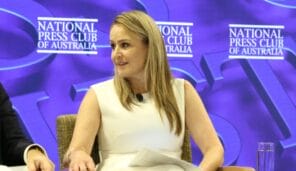
In a statement, SMSFA chief executive Andrea Slattery said: “It’s critical to improve the governance of all superannuation funds, and having independent directors and chair is a positive step in this direction.”
All super funds except SMSFs, that is: when trustee and member of a fund are one and the same person, it cannot be argued that a trustee is independent.
That’s not to say there’s anything intrinsically wrong with the current SMSF governance structure; nor that having independent trustees on APRA-regulated funds is a bad idea, either – because it’s not.
It’s simply to say that here is an inconsistency in how two significant sectors of the superannuation industry are governed; and to ask why, if one group is going to be allowed to have non-independent supervision of superannuation savings, is it not also appropriate for the other group?
Get rid of employer trustees?
To achieve consistency, either independent trustees should be appointed to SMSFs, which is clearly not a good idea, or the only trustees on APRA-regulated funds should be members and independents – get rid of the employer-representative trustees (it’s not their money anyway). But that’s probably not the best idea, either.
In its support for the independent trustee model, SMSFA invoked the issue of “best interests” – as in: “Increased independence of superannuation fund boards should allow those saving for their retirement, or drawing down on their savings in retirement, more confidence that their funds are being managed and invested in their best interests.”
It’s an interesting concept, “best interests”. It’s a little bit like the “public interest”. An individual’s best interests are not necessarily the same as what interests them. The public interest is not necessarily the same as what interests the public.
If you want to get a sense of this, compare the front page and news section of, say, the Sydney Morning Herald or The Age with what those same publications feature on their websites.
The former is edited and presented for its news value with regard to, among other things, issues that affect the public interest. The latter reflects more closely what interests the public.
Arnie, chocolate, happiness and transgender hecklers
That’s why the front page of the SMH website – at the time of writing – features articles about Arnold Schwarzenegger, chocolate, the “happiest” country in the world to live in and President Obama dealing with a transgender heckler at a White House event.
The print version, on the other hand, leads with a defence of the ABC as a public broadcaster rather than as a state broadcaster; the problems facing NSW TAFEs, and a call by farmers to the Liberal Party to stand up to climate change sceptics.
In a similar way, an individual’s best interests are not always the same thing as what they simply want. And sometimes the individual in question is not even the best person to decide what their own best interests are – irrespective of how condescending or patronising that might sound.
In the context of superannuation, someone who wants to save in a tax-advantaged environment can’t just use those savings any which way they want. For example, while it may interest that person to pull money out of a super fund to buy a home, it may be in their best interests to leave the money in the fund, accumulating over time to fund a better retirement income stream.
When the trustee and the member are one and the same person, whose view would prevail? Is there a need for an “independent” voice to guide the members’ thought processes?
If there isn’t a need – if the laws and regulations around superannuation are sufficient, even when trustees are demonstrably non-independent – then why isn’t that appropriate for all super funds?
And if it is appropriate to make a distinction because SMSFs are different after all, then why can’t that principle be extended to investments as well?
Just saying.