
Wealth management business Yellow Brick Road will launch today a new online modelling tool it claims will turn the financial planning process on its head, handing “power and control” directly to consumers.
The firm is also hiring what it calls “money coaches” – individuals who are not necessarily qualified financial planners – to help guide consumers through the initial stages of the new process of modelling financial outcomes.
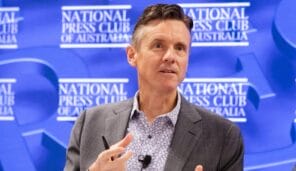
“A coach has different skills to a typical planner,” says Grant Pearson (pictured), head of wealth management and chief risk officer for YBR.
Pearson says too many planning businesses focus on technical skills as the be-all and end-all for financial planners.
“Give me 10 people that come out with a psych degree rather than 10 people who come out with a finance degree, any day of the week,” he says.
Dubbed “GURU”, the YBR process will be rolled out today in 15 branches, and a further 20 or 30 will be added in coming weeks. It will only be available for use in YBR branches, in collaboration with a money coach.
Pearson says the GURU process addresses upfront the three main reasons consumers say they do not use the services of a financial planner: they are not wealthy enough to warrant using the services; they do not trust financial planners; and they can’t afford to pay for financial advice.
Pearson says the YBR process is aimed at addressing the 80 per cent of potential financial planning consumers who do not currently consume planning services. The aim is to demonstrate simple steps that an individual can take to improve their financial situation, and what their financial future could look like as a result.
No advice, no product and no cost
There is no advice, no product and no cost attached to the initial phase, and no need for a statement of advice (SoA). Pearson says GURU is designed to empower the consumer and encourage them to take control. If they move to formal advice, a “Roadmap” formalising the advice starts at $900 plus GST; ongoing annual reviews start at $600 pus GST a year.
“Why are we doing this? Because we can,” Pearson says.
“This is mainly about the 80 per cent that isn’t being served. We look at the financial planning industry, you look at the conversations last week at [Dealer Group Summit], and it’s focused on the 20 per cent and how do you wring more out of the current piece.
“Those are what Mark [Bouris, YBR executive chairman] would call ‘rivers of gold’; they have entrenched business models. They won’t necessarily be early adopters of taking a non-product approach to helping the average person living in suburban Australia.”
Pearson says the YBR proposition starts with the idea that most people don’t need a full range of financial planning services.
“Financial planning as a model, we believe, is overused for most people,” he says.
“Therefore there’s this continual debate around cost.
“People do not see the utility [of financial planning] and it’s hard for them to make a value call. And then you see the average person when they are surveyed on the street, what do they say? ‘I’d pay $300,’ or something like that, for a plan. That’s the only point they think this can have value.”
Pearson says YBR’s aim is to “take the end result of the whole financial planning process, and bring it up in the first 15 minutes, that you can walk away with, for free”.
“What I mean by that is your destiny and how you want to set things up for the rest of your life,” he says.
Consequences of lifestyle choices
Pearson says it can take factor in, and show the consequences of, a range of potential lifestyle choices, like putting children through private school, replacing the car every year and even the home loan they may have.
“All the typical suburban lifestyle issues,” he says.
“And you can model all of this…but it’s not the machinery itself [that is significant]. We see this latest rave around robo advice and our call on that is, even young people who are technology-able and confident will want to talk to someone and go, ‘What do you think?’
“This is not just a mathematical, logical process that planning and these new calculators coming out from America make it out to be.”
Pearson says YBR is working to make the link between its money coaches and financial planners as seamless as possible.
“We’ve got financial planners, and do we do traditional financial planning? Of course we do,” Pearson says,
“But where we are focused is the 80 per cent of customers who are not engaging. And then we sat back, and over 18 months we’ve been building this and building a network of competency around the country. What are the things that really help someone out? What really makes a difference? It’s not about what fund they are in, or how cute or sophisticated a particular product is.
“It’s about ensuring they’re using the home loan they have got properly. It’s about ensuring they do not spend every cent they earn – and we know 98 per cent of the population does, because they’ve got $100 billion of credit card debt.”
In some cases a money coach will be qualified to progress to providing advice; on their cases there will be a handover to a YBR financial planner. Pearson says they a successful transition is “the art of planning”
“It’s about how that second person slides into position, and how the first person still hangs around,” he says.
“But it’s done with a degree of smarts, so you’re not burning two lots of time, you’re doing it efficiently, and you’re doing it seamlessly with the client.”
Regulatory restrictions
Pearson says the GURU process will develop over time, as will the online interface that money coaches use with clients. For the time being, as well, regulation will restrict just how far it can be taken.
“We want to make sure regulation doesn’t prevent us from serving the 80 per cent,” he says.
“If you take the traditional planning model, it kind of does. I get the arguments about the regulator, but if you read those regulatory guides they make perfect logical sense, but they all start from a position of the financial planning process.
“We’re trying to move not necessarily lock-step with that – still the same principles – but it does mean we’ve got to play by the current rules. In future we’d like to influence those, to make this even broader. Can you imagine the kind of person you could bring into the industry to help with this?
“It’s not about how many planners. You don’t necessarily need planners for a lot of this. Things in legislation will need to change in order for us to be able to open this up. But we’ve got enough to go now.”