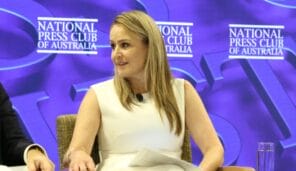

Specialised skill sets are increasingly important for financial planners, says Craig Banning, director, Navwealth Financial Group.
He uses the example of self-managed super (SMSF) advice. When asked if this requires specialised knowledge, Banning says, “I think it does.”
This is why every adviser within Navwealth that deals with super clients holds the SMSF Association’s SMSF Specialist Adviser (SSA) accreditation. Banning believes there is a limit to how much an adviser can educate themselves, “because you don’t know what you don’t know.”
“You just can’t be over it all. It would take a pretty special person that can be across tax, investments, super, cashflow, centrelink, share markets,” he says.
Navwealth holds an Australian Financial Services license from AMP Financial Plannning. With one office in St Leonards, in Sydney’s lower north shore, the practice was founded around 23 years ago by Banning, who started out as a sole practitioner.
Since then, it has grown to a team of 20 people, including nine advisers and 11 support staff. Among the advisers are four financial planners, accountants and AMCs.
Three of the advisers are Certified Financial Professionals and one holds a Masters of Financial Planning degree. The two in-house accountants are degree qualified and are members of CPA Australia and the Institute of Chartered Accountants Australia, respectively.
Banning says it is a “high touch practice” that provides advice on financial planning advice, accounting and tax, business management, lending and life insurance. “Our advisers project-manage all the advice needs for our clients by either engaging the various advisers within Navwealth or by introducing our external advice partners to our clients,” he says.
SMSF advice
SMSFs account for a substantial proportion of Navwealth’s revenue, one reason why it has in-house accounting resources.
Acknowledging the importance of these retirement planning tax structures for his clients, and the huge growth of the sector, Banning says he is also mindful that SMSFs are not right for everyone. “I’m very conscious of not recommending self-managed funds to clients where it’s not appropriate.”
He refers to the example of one client that approached him for advice in the last few weeks, who jointly held around $600,000 in super assets between himself and his wife. While currently holding a corporate super fund, the client asked Banning whether he should consider a super fund. “I know a lot of advisers would jump at the chance to move that sort of money into a SMSF for the client,” Banning says.
However, given this client was a time-poor business-owner who was well-served by his existing super arrangements, Banning advised him against an SMSF. “That’s not to say SMSFs aren’t suitable for smaller balances…but we don’t lead on products or on property,” Banning says.
Advice remuneration model
Navwealth receives commissions for risk and lending business, but has adopted fee-for-service across its wealth and accounting clients.
The remuneration debate has been a key feature of investment advice, and has more recently dominated the life insurance space. “My position is that we need to sort out the professionalism issue. If we don’t nip this in the bud, we are never going to get out of this debate,” Banning says.
He doesn’t believe fee-for-service is a widely viable remuneration model for life insurance advice. “I’m yet to meet an anyone who can do it fee-for-service and make money out of it,” Banning says.
“And I imagine some families simply don’t have the money there for an insurance fee, client often don’t have $3,000 or $4,000 [to pay an insurance advice fee.
“Everyone seems to think it is very quick and simple [to provide life insurance advice] but in one case recently we spent 32 hours advising one client,” he says.
Banning believes investment advice is quite different, though acknowledges that some advisers are able to offset a fee structure for insurance advice using the investment component.