

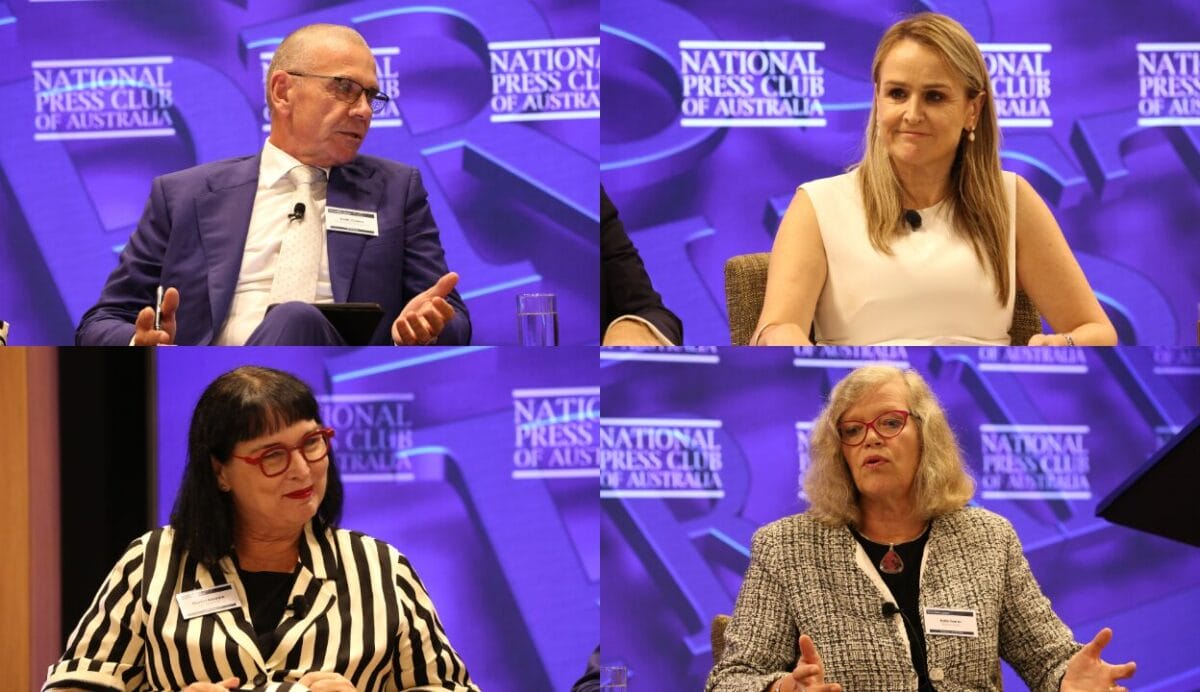

Leaders from across the financial advice ecosystem have used the Professional Planner Advice Policy Summit to call for stronger punishments for misconduct rather than adding to layers of regulation that were already ignored during the Shield and First Guardian collapse.
Misha Schubert, Super Members Council CEO and National Press Club of Australia vice president, told the summit that minimum standards of consumer safety across the financial services system needed to be lifted.
“I have talked a bit in the public square about the importance of us trying to shut and bolt the door to consumer harm for all time and I mean it,” Schubert told the summit, hosted at the National Press Club of Australia in Canberra.
“This is a really reflective moment for the system architecture as a whole to think about in whatever role we play, how do we close that role to harm and how do we make sure these sorts of things can never happen again.”
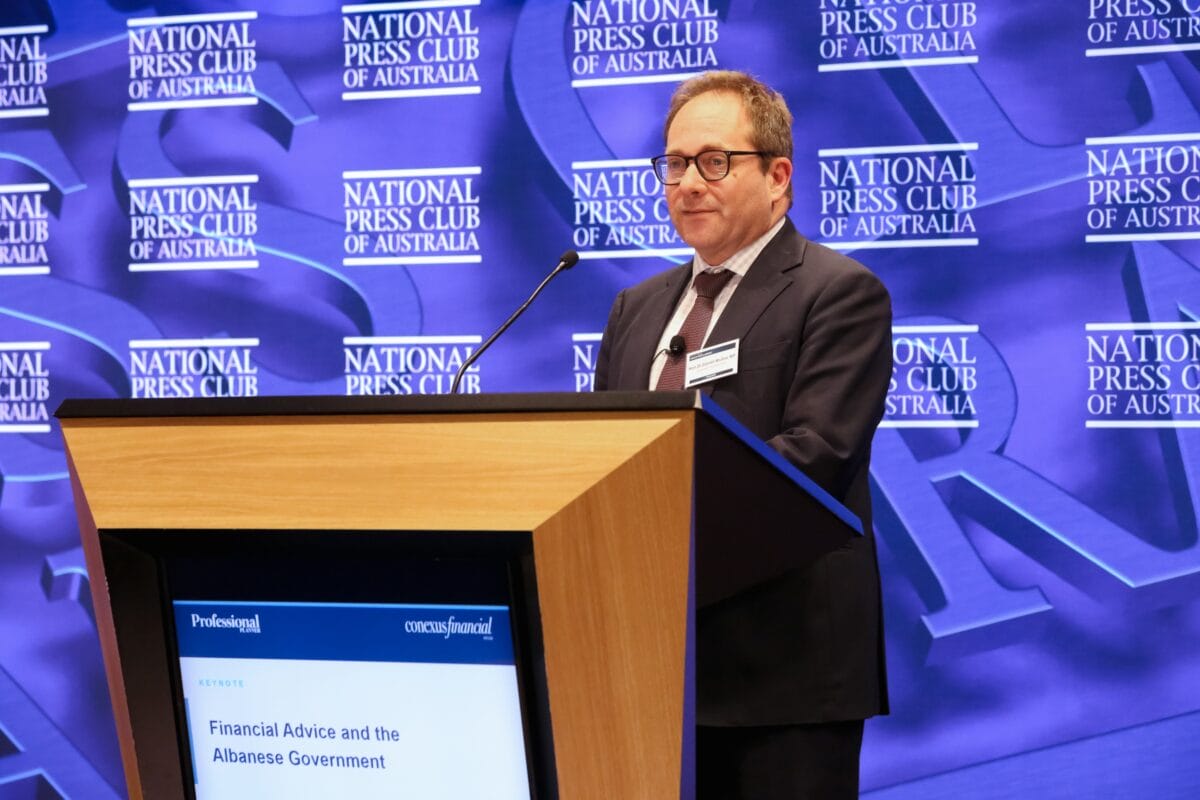
Minister for Financial Services Daniel Mulino told the summit later that day that advice reform remained a priority – despite expressing concerns just weeks earlier – but that any changes would be rolled up into his consumer protection reform agenda.
Mulino had steered away from committing to finishing advice reform via the Delivering Better Financial Outcomes legislation due to the aftermath of the Shield and First Guardian collapse.
Late last year, the minister announced a suite of policies to lift consumer protections that would address public concerns over the use of lead generators, oversight of managed investment schemes and superannuation switching.
Wealthadvice principal Marisa Broome agreed with Schubert that consumer protection standards needed to be lifted but questioned whether more regulation would help.
“Policing and prosecuting the existing regulation is going to be a much more effective way than introducing another band aid on the pimple,” Broome said.
“It horrifies me because what we’re not hearing [about] is the 99.99 per cent of our amazing life changing advice that happens out there and unfortunately only a very small number of people can afford to come and see me or see any of my peers at the moment and that is equally as depressing.”
Broome said consumers will continue to be a risk if there isn’t more done to improve the financial capabilities of Australians so they don’t fall into the trap of bad advice.
“People in Australia are wealthy, but they haven’t got the skillset to deal with it properly because they can’t get guidance, nudging or advice in the right way,” Broome said.
WT Financial Group founder and managing director Keith Cullen said regulatory obligations were completely disregarded in the case of Shield and First Guardian.
“Australia’s got world leading consumer protection laws and multi-layered statutory obligations across the financial services sector that services super members,” Cullen said.
“I’m not sure how new laws are going to help a situation where people just disregard existing laws.
“This needs to be front and centre because it’s been a systemic failing. It’s been a failing of the individual advisers who gave the advice, it’s been a failing of their licensees that had the responsibility of supervising and ensuring they were delivering advice in the best interest.
“It’s been a failing of the platforms that let these products onto their platforms without appropriate due diligence and then didn’t do anything about the massive flows or make any inquiries about the massive flows they were seeing.”
Cullen said that because the government compels investors into a mandatory retirement accumulation system there should be protections.
“This is not normal investment and I’m not talking guaranteeing the investment outcome, I’m talking about guaranteeing consumers and underwriting the risk of fraud and theft such as we’ve in these cases,” Cullen said.
“The best way to underwrite that situation is out of the pool of capital itself. We do think there should be a levy on all super members, and the government should administer it.
“As part of that, ASIC needs more funding and more resources to supervise people in a proactive way… and we also think AFCA needs powers to apportion liability in special circumstances like this because at the moment it can’t.”
Brighter Super CEO Kate Farrar said the industry needs a level playing field and that “some sectors of the chain” don’t have the same reporting requirements as APRA-regulated funds do.
“The investment governance work on the platform trustees is important, it’s much harder when you have a huge investment option menu than it is when you have a small investment option menu,” Farrar said.
“But nonetheless, people are not invested in a fund overall, they’re invested in investment options and every option should be diversified and it should be liquid. Pursuing those sorts of oversight opportunities by both APRA and ASIC is a good thing.”
Farrer praised the launch of a new consultation on managed investment schemes that Treasury commenced earlier this month.
“There’s not enough data, it’s not a level playing field,” Farrar said.
“These are regulated, licensed products and therefore it’s the right thing for people to expect that they are transparent and oversighted. If we get to that, that would be great.”




The below is an excellent point, and totally lost on bureaucrats and the government. This is why productivity will never improve in Australia.
“Policing and prosecuting the existing regulation is going to be a much more effective way than introducing (more legislation)”.
There’s another ‘P” ie preventing ie earlier identification of rogue actors and the triage of potential issue to minimise consumer loss and damage to the sectors reputation