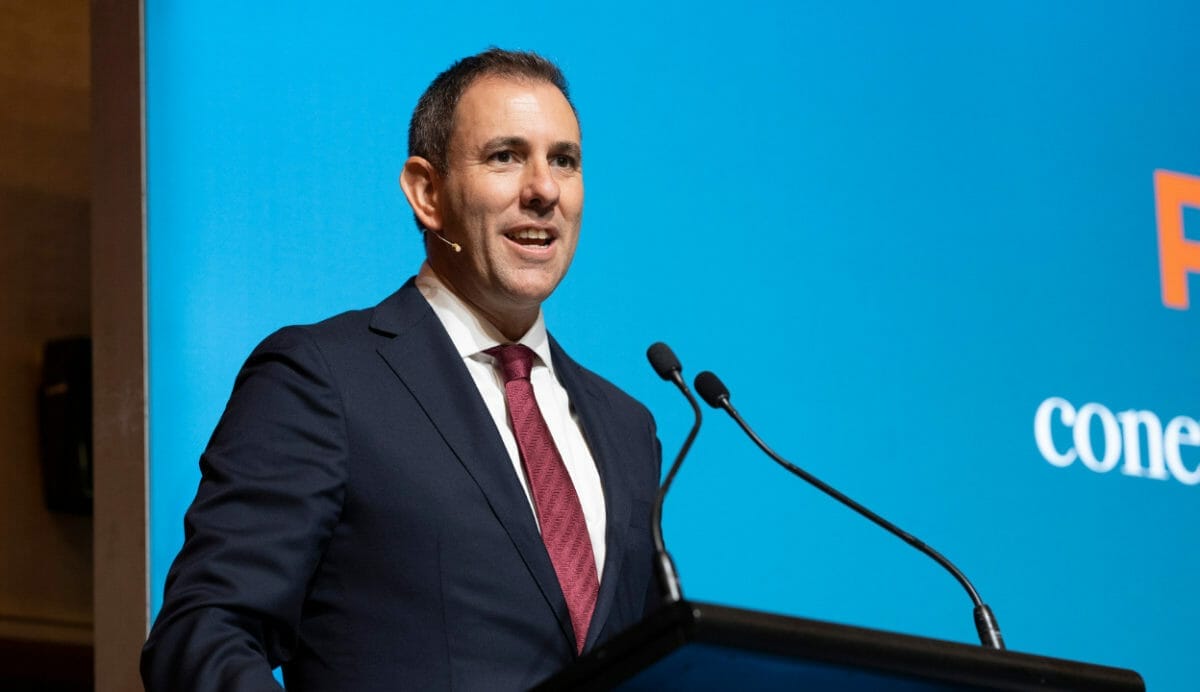

Treasurer Jim Chalmers’ confirmation that the government will likely tweak the annual super performance test is welcome news for those of us who advocate for a robust fiduciary duty.
The treasurer on Thursday confirmed the government will “look at” the performance test to address industry and independent expert concerns that it inhibited funds’ ability to invest in assets they believe are in their members’ best financial interests, as foreshadowed by Professional Planner sister publication Investment Magazine.
It is patently true, as the prudential regulator has attested, that the test has had some material benefits for the system by forcing some chronic underperformers out of it. But it has also resulted in perverse outcomes, including “herding” activity that makes super fund portfolios look increasingly similar, incentivising them to game the system and reducing competitive tension that might make super a more dynamic marketplace for consumers, as identified by our roundtable on emerging “systemic risks” in the super system, a special report on which was published on Thursday.
Minister for Financial Services Daniel Mulino acknowledged the potential consequences of “index-hugging and misallocation” of resources at the Retirement Leaders Summit in Canberra last week, a joint initiative of Professional Planner publisher Conexus Financial and The Conexus Institute*.
Of course, ‘index-hugging’ or investing in low-cost, rules-based passive investment vehicles is an entirely legitimate strategy for asset owners to embark upon. Indeed, a string of Nobel Prize-winning economists would argue that it is a superior one, given the well-documented inability of the majority of active fund managers to outperform the market.
However, this should be a decision for funds’ chief investment officers in line with their stringent trustee obligations and sole purpose test – not the federal government or financial regulators.
And CIOs are much better placed than retail investors to select the minority of asset managers that truly do outperform and generate alpha.
Australian funds have effectively been priced out of some of the world’s best and most highly specialised investment strategies, weakening the global competitiveness of our otherwise lauded retirement savings pool.
That is why Conexus Financial has been a vocal advocate for changing the test, including very public remarks by founder and managing director Colin Tate AM to a business forum in Sydney this month which both the Treasurer and Prime Minister Anthony Albanese attended – just as we have also advocated for a reduction in red tape for financial advisers.
A test that incentivises a highly benchmark-aware approach to investing undermines the ability for funds to maintain investment sovereignty.
And yet some critics of the government’s openness to amending the test are illogically arguing the complete opposite.
Most prominently, the Australian Financial Review’s editorial page on Wednesday argued that “Australia should be wary of any changes to the current system that would tamper with the funds’ fiduciary duty to act in their members’ best interests”.
The charge is that the Treasurer’s willingness to allow funds to deviate from benchmarks to invest in ESG could see super funds enlisted to help achieve the government’s goal to help Australia become a ‘green superpower’.
The paper, and other critics, are right to be sceptical about the government’s ambitions here, given the controversial mandate it handed the Future Fund and the longstanding messaging coming out of the Treasurer’s regular investor roundtables.
But the criticism conflates a pro-ESG investment mandate with a tweak that would allow funds to apply that lens where appropriate or if – and only if – they so choose. It was arguably the Morrison government that forced the hand of funds in designing a test which disincentivised ESG.
Broad-based, passive exposures to markets are often carbon-heavy, which creates a problem for the many who have a net zero commitment they are being told by regulators they must meet or risk falling foul of greenwashing provisions.
Moreover, it is telling that a publication with a long track record of advocating for limited government and free enterprise is in this case favouring what is a clear and draconian intervention in the market. Clearly, the obsession with the trade union movement links of some funds makes super the exception to the rule.
Other critics of amending the test, especially activists such as Super Consumers Australia, have a long track record of favouring state-owned solutions and are clearly sceptical of the ability of the private sector to provide meaningful financial services in the public interest – a worldview no doubt shared by many in the community, but not this column.
As for the return of capital to members, it is always welcome to see the finance industry eschewing what has historically been a global flaw – over-charging and under-performing.
But the race to the bottom on fees has also weakened the ability of funds – especially profit-to-member funds without a for-profit shareholder or balance sheet – to improve operational infrastructure and provide quality product and customer service for members.
Some more conspiratorial industry observers even believe that was the previous government’s very ambition – to weaken the super system by hamstringing its ability to invest, thereby accelerating rising scrutiny from regulators.
That is why this column deliberately avoids those favourite words of every lobbyist – “unintended consequences” – although, it should be said, there is little evidence to support the claim and Coalition sources privately reject it.
Nonetheless, there is little doubt that both the performance test and the best financial interests duty – whatever their merits – have made funds at least more cautious about, if not directly impeded, their ability to allocate capital both in portfolios and operations, right at a time when they are being called on to do both more productively.
For the avoidance of doubt, the conclusion is not that funds should be protected from scrutiny. Far from it. If funds are falling prey to ideological bias and investing in vanity or passion projects that are not in members’ best financial interests, they should be taken to task. And similarly, YFYS cannot be an excuse for poor product or member service.
But the sole purpose test and trustee obligations implicit in what Paul Keating called the “grand bargain” of superannuation provide a sufficient mechanism by which regulators, the public and press can hold them accountable.
Like the advisers’ best interests duty, the fiduciary duty of Australian super funds to their members is both powerful and enforceable. Prescriptive and ill-conceived government regulation undermines that.
*The Conexus Institute is a not-for-profit think-tank philanthropically funded by Conexus Financial.