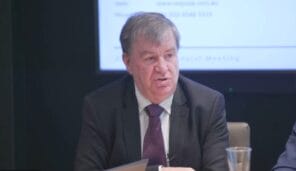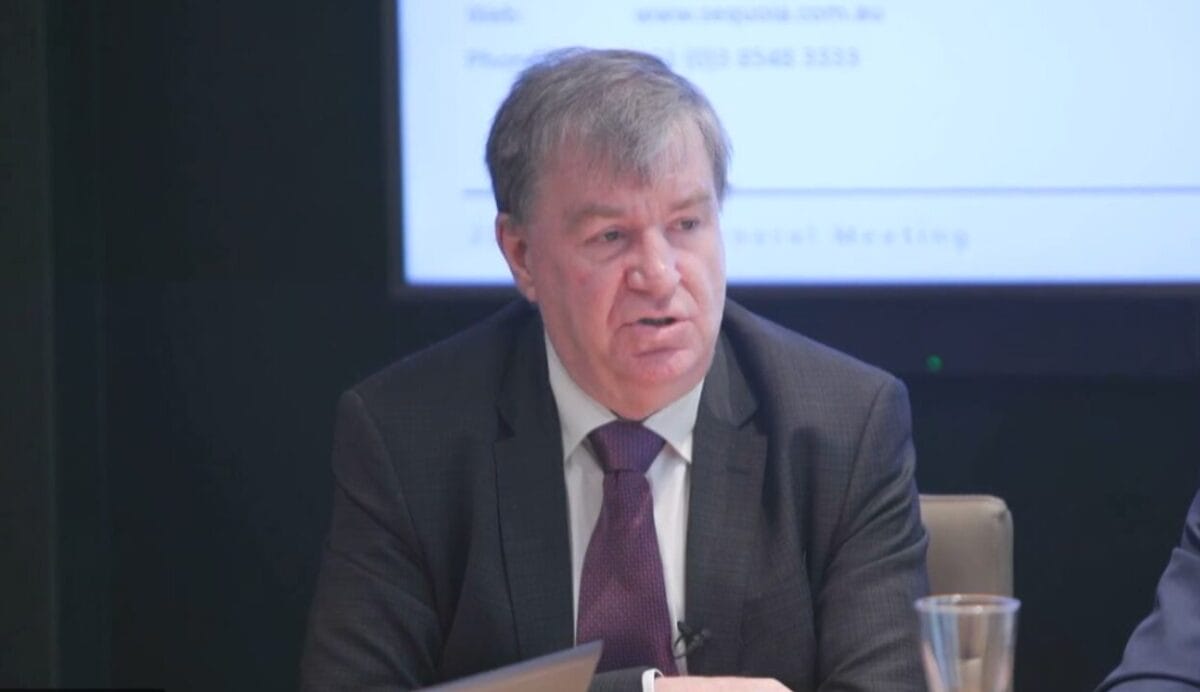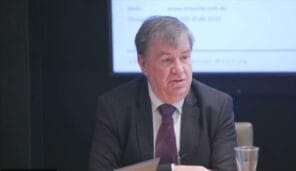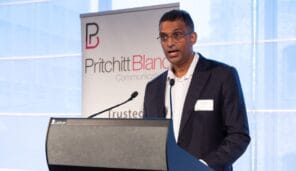

Insignia Financial CEO Scott Hartley believes moving to private ownership will make the business nimbler as it seeks to complete its transformation plans outside the purview of the listed market.
Insignia announced to the ASX on Tuesday morning that CC Capital has agreed to acquire the company for $4.80 per share, subject to approvals, likely ending the long, drawn-out bidding war.
“The benefit of operating in private with a strong backing of CC Capital is that it allows us to be more nimble and move with speed and capitalise on significant growth opportunities which might have been more difficult in the listed environment,” Hartley tells Professional Planner.
“For example, there’s going to be more consolidation in the industry, no doubt. Having a strong financial partner who wants to invest and grow this business will allow us to be more nimble in opportunities to participate in consolidation.”
Hartley says one of the advantages of having private ownership is having the flexibility to forego some profitability in the short term to execute longer-term plans.
“I expect over time things will happen or opportunities will emerge in the market, such as consolidation where it will be much easier to participate as a privately-owned company rather than a listed company.”
The deal offers a 56.9 per cent premium to Insignia’s closing share price of $3.06 on 11 December, the last trading day before ethe offer from Bain Capital, but down from the peak $5 per share offer on 7 March.
“This is a very good price for our shareholders,” Hartley says.
Insignia has entered into the scheme implementation deed with Daintree Bidco Pty Limited (CC Bidco), an entity established by CC Capital Partners for the acquisition of all the issued shares of Insignia by way of scheme of arrangement which is valued at $3.3 billion.
Hartley joined as CEO over a year ago and has since unveiled a corporate restructure and “Vision 2030” – the group’s strategy for the remainder of the decade.
He says there will be no change to the overall strategy and that CC Capital are “financial buyers, not strategic buyers”.
“[They are] supportive of our 2030 vision and strategy and are very keen to work with management on the execution of that strategy,” Hartley says.
The move to delist from the ASX comes as ASIC reviews the regulatory framework between public and private markets – whether the former is too heavily regulated or the latter underregulated – with the regulator acknowledging that being listed has become unattractive.
Hartley says one of the advantages of having a private owner is not having as much public disclosure.
“That has its advantages and there’s not as much distraction with the work environment,” Hartley says.
“We’re able to do thing and build competitive strategy and compete in a way that is more effective under private ownership that public ownership.”
However, Hartley concedes he’ll miss some aspects of leading a listed company.
“The difference will be is I won’t be speaking to public market shareholders and I actually enjoy doing that,” Hartley says.
“In some respects, I’ll miss that, but it is a significant time commitment and it will give me more time to focus on the business and the strategy and execution of the business.”
For approval
Insignia’s board “unanimously” recommended that shareholders vote in favour of the scheme subject to an independent expert concluding the deal is in the best interest of Insignia’s shareholders and assuming a superior offer doesn’t arise.
In its recommendation to approve the deal, the board factored in the eight bids it received prior to the binding offer received from CC Capital, the lengthy and comprehensive due diligence process undertaken by CC Capital in formulating its binding offer, the premium offered and the recent and potential impact of market volatility on global capital markets.
The acquisition is still subject to approval from the Australian Prudential Regulation Authority, the Foreign Investment Review Board and the Australian Competition and Consumer Commission.
Assuming all conditions are satisfied, Insignia expects the scheme to be implemented in the first half of the 2026 calendar year.
Hartley says the board, management and advisers for the acquisition “have gone through a lot of analysis” to form the view that $4.80 is a “compelling price” for shareholders.
“The board has recommended this after very careful consideration and evaluation,” Hartley says.
“We’re talking six to nine months before shareholders will get to vote on this deal. Conditions can be quite different in six to nine months. Conditions today are very good in our business – which you haven’t mentioned by the way – our quarterly results are outstanding.
“What’s pleasing for me is that business momentum has not been distracted by this activity.”
Simultaneously releasing its 4Q25 results, Insignia posted strong net inflows of $1.2 billion into MLC Expand, the highest on record, with wrap funds under administration up 5.3 per cent to $102.9 billion.
Insignia recently pivoted to revive the consumer-facing MLC brand, which comprises superannuation, adviser-facing platforms and asset management businesses, largely inherited from the megamerger between IOOF, NAB/MLC and ANZ OnePath.
The superannuation fund FUA was up 4.1 per cent to $135.2 billion and approaching net neutral flows, but the asset management arm’s funds under management was down 2.1 per cent to $92.2 billion.
Insignia also transitioned in-scope super fund functions to SS&C on 1 July 2025, which saw 1300 employees move over to the admin provider.
Race over
Bain launched its first bid on 12 December for $4 a share which was rejected later that week and CC Capital launched its first offer at the start of the year with a $4.30 per share bid that was matched by Bain.
A third player, Brookfield Capital Partners (UK), added another bid in February for $4.60 per share only to pull out when Bain and CC Capital each raised their offers to $5 a share, granting a six week due diligence period.
The due diligence period begun on 7 March which was extended to 15 May on the request of both parties.
Bain ultimately pulled out by the 15 May deadline while CC Capital remained in play.
The bidding war came less than a year after Hartley took over from Renato Mota after the group’s share price languished despite attempts by Mota to reposition the company in the post-Hayne royal commission world.
Hartley, the former Sunsuper CEO who joined AMP during their own post-Hayne rebuild under CEO Alexis George, announced a re-structuring project only a few months into his tenure.