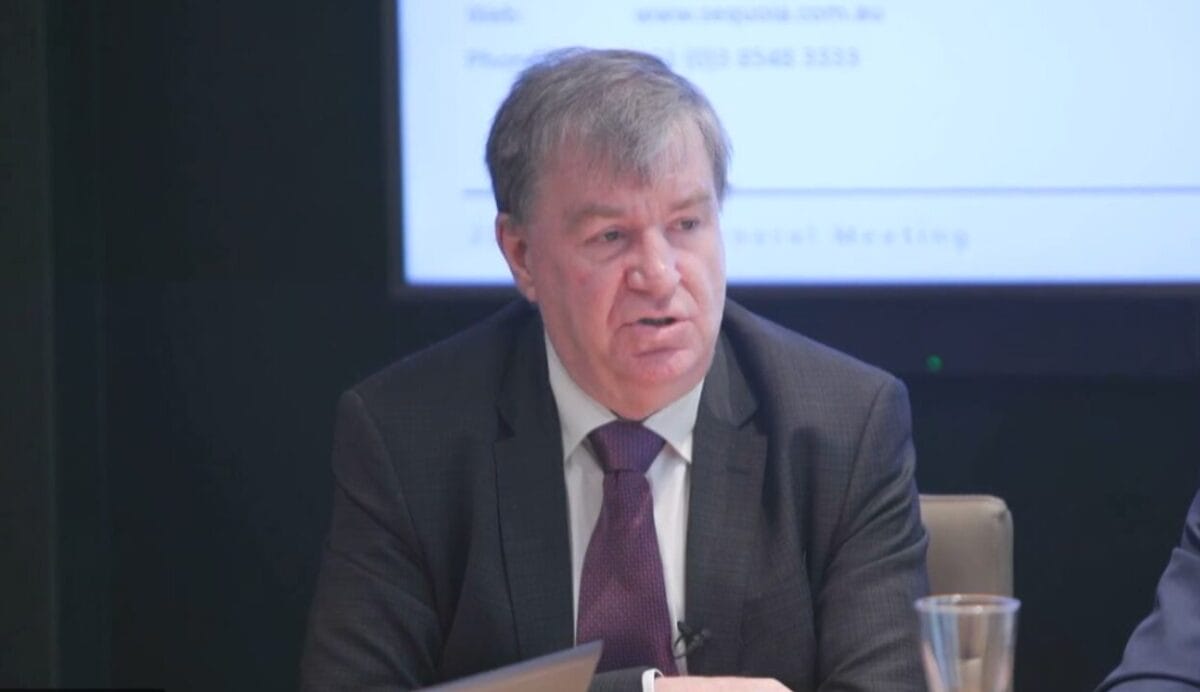

The federal court has determined Mayfair 101 Group and director James Mawhinney contravened the law when they made multiple false or misleading representations in the marketing of its products.
It follows proceedings brought by ASIC which argued that promotional material falsely suggested these products were safe and similar to bank term deposits when the investments actually carried significant risk.
The court determined the Mayfair 101 Group companies contravened the law when they made multiple false or misleading representations in the marketing of the M+ Fixed Income Notes, M Core Fixed Income Notes and Australian Property Bonds.
It was also found Mayfair 101 companies engaged in misleading or deceptive conduct by failing to disclose in marketing material that investor redemptions had been suspended.
The court also found another Mayfair company, IPO Capital, carried on a financial services business from 2016 to December 2017 without an AFSL.
ASIC said the companies that offered the core notes and the IPO Wealth Fund are in liquidation and redemptions in the remaining products have been suspended since March 2020.
Mawhinney requested an opportunity to make further submissions on relief and has been granted a three-week deadline.
‘Tourism Mecca’
Mayfair acquired the cyclone-damaged Dunk Island in North Queensland in 2019 for $31.5 million and purchased 200 properties in the nearby town of Mission Beach with the aim of turning it into a premium tourism destination, according to evidence provided to the court.
Dunk Island was badly damaged by Cyclone Larry in 2006 and Cyclone Yasi in 2011 and the redevelopment was meant to be funded through the group’s investment products.
The judgment noted the island had some infrastructure – a 900-metre airstrip and a damaged and disused resort – and a demolition and rebuilding option was estimated to cost $150 million.
In the space of eight months, Mayfair companies signed contracts to buy nearly 300 properties on Mission Beach for an anticipated total purchase price of over $200 million.
But the judgment said the pace of real estate purchasing in the Mission Beach area was “frenetic” and lacked incoming capital to fund the deals.
“The Mission Beach project was fragile, and vulnerable to any disruption in the ongoing flow of funds from new investors,” the judgment said.
“So precarious was the capacity to fund settlements on the torrent of contracts coming due that, in some periods, Mr Mawhinney was working with a conveyancing solicitor and members of his team – sometimes day-by-day, and sometimes even almost hour-by-hour, looking to when funds would be received – so as to manage settlements and negotiate extensions.”
The judgement said that while Mawhinney blamed Covid-19 and ASIC, he had “not grappled” with vulnerabilities in the structures he established and the frenetic pace of property purchasing and a lack of sufficiency analysis of cashflow and funding capacity.
“The scale and pace of these activities saw many investors suffer devastating losses when the music stopped, and the venture failed,” the judgment said.
“Many, but not all, of the lay witnesses who gave evidence were elderly people. The Mayfair Group’s marketing strategy sought to attract these retirees with the promise of higher rates on fixed term investments than they could obtain from the banks.”
Justice Button did concede Mawhinney did not set out to create and run a venture that was wholly indifferent to compliance.
“However, the advice received regarding the need for an AFSL for IPO Capital’s operations was superficial in the extreme, not based on any thorough set of instructions or documentation, and was received after IPO Capital was already active in the market,” the judgment said.
“Mr Mawhinney also persisted with keeping IPO Capital active long after even his own lawyers recognised and, I infer advised, that an AFSL was required. The legal advice obtained in connection with IPO Capital does little to ameliorate Mr Mawhinney’s culpability in relation to the contraventions relating to IPO Capital.”
Lack of security
ASIC first commenced proceedings against Mayfair in April 2020, alleging that its advertisements were misleading or deceptive.
At the heart of the concerns were declarations Mayfair debenture products were comparable to bank terms deposits with a similar risk profile, when they were debentures with a significantly higher risk profile.
It was promised the principal investment would be repaid in full on maturity, when investors might not receive capital repayments on maturity or at all.
ASIC had alleged many investors were misled and had little to no understanding of the risks involved. Over $210 million was raised from investors, much of which is believed to be unrecoverable.
The court banned Mawhinney from promoting and raising funds through financial products for 20 years in April 2021, a decision overturned in September 2022.
In December 2021, the court ordered four companies in the Mayfair 101 Group to pay a combined penalty of $30 million for misleading or deceptive advertising.
Mawhinney was arrested and charged with four counts of engaging in dishonest conduct in the course of carrying on a financial services business in April 2024.
For people who invested in the IPO Wealth Fund, the licensee of the fund (DH Flinders) is still an AFCA member and can hear complaints.
However, Quattro Capital Group, the licensee of the M+ Fixed Income Notes, M Core Fixed Income Notes or Australian Property Bonds products, ceased being a member on 4 March 2021 and AFCA no longer has the power to hear complaints.