
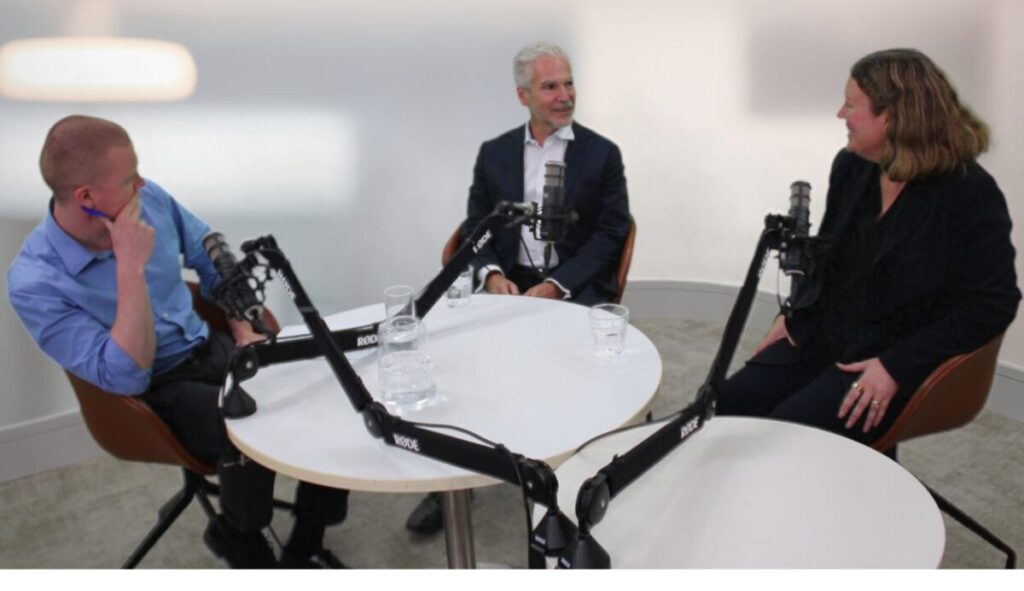

Despite geopolitical turbulence, markets are avoiding short-term turmoil and reacting to the underlying fundamentals showing the strength of major economies, according to AMP.
AMP chief investment officer Anna Shelley told the Professional Planner Managed Accounts Decoded podcast that markets are viewing challenges like the war with Iran as short-term turbulence rather than a longer-term challenge.
“Even though it’s stretched out now to longer than eight weeks, the market is still looking through and they’re looking at the US economy which looks really strong in an underlying sense,” Shelley said.
She added that the strength of the US economy is backed by the AI megatrend and the capital spend associated with that.
“[But] markets have gotten a bit used to central banks bailing us out whenever there’s a sign of trouble so that’s probably the other factor,” Shelley said.
Eliot said earnings growth is “spectacular” around the world.
“If you’re looking at US earnings for the current year, it’s sort of anything from 20 per cent to 25 per cent year over year,” Eliot said.
“In emerging markets, the numbers we’re looking at yesterday was like north of 40 per cent. No matter what happens with valuations, that really underpins strong equity markets going forward.”
As investors continue to operate in a high-inflation environment, Shelley says inflation protected assets are beneficial to portfolios.
“If we look forward, we’re not thinking it will be a disaster in terms of inflation, but it could definitely hang around 3-3.5 [per cent] in the medium term at the very least,” Shelley said.
“It’s probably that interest rates, therefore, will be higher for longer in that sort of an environment and so some inflation protection, real assets, are super important to the portfolio.”
Eliot said the firm is continuing to build out its direct infrastructure program.
“We think there’s a solid opportunity going forward as well,” Eliot said. “[We’re investing] global, so North America and Europe at the moment.”
The pair also discussed how the group has worked a dynamic asset allocation into their managed portfolio offering.
“The dynamic asset allocation is implemented mainly with futures, FX forward swaps, these sort of things which don’t naturally live inside that environment,” Eliot said.
“But you can also add other ideas through specialist funds, so we have a long volatility strategy within their managed portfolios which helps us diversify during times like March and then you have the flexibility to invest in sector or thematic ETFs as well.”
The group has also included bitcoin as part of its DAA program since May 2024. Eliot said there’s very few ideas that can’t be accessed through a managed portfolio structure.
“For example, you can’t buy OTC put options on S&P or dividend futures which sometimes can be attractive but it’s a very small subset of the ideas we have that wouldn’t be able to be played in that space,” Eliot said.
Managed accounts have long touted the tax efficiencies of the structure and Eliot says the ability to change strategy without capital gains implications can have benefits for retirement income.
He pointed to an example of a client with high growth managed funds who needs to be switched into a balanced strategy as they approach preservation age.
“You have to sell down the entire high growth fund, realise capital gains tax on the whole amount and then put the net proceeds into a balanced fund,” Eliot said.
“That’s not very tax effective. The way we’ve built our managed portfolio suite – you can think of it as a grid. On the X-axis you’ve got high growth, growth, balanced, down to conservative. Across the Y-axis you’ve got the simplest, least sophisticated portfolio all the way out to the most sophisticated, highest active share portfolio.”
Eliot says an adviser can move their client up or down within one of those streams or between one growth profile to another, maybe turning over 20-30 per cent of the portfolio.
“That really allows them to harness those tax efficiencies so they have more assets as they move into retirement,” Eliot says.
The pair also discussed how recent geopolitical issues, including the war with Iran has impacted portfolios.












Leave a Comment
You must be logged in to post a comment.