
Financial advisers and their clients are increasingly demanding customised, bespoke investment solutions as scrutiny of the role of researchers and assets consultants ramps up in the wake of the Shield and First Guardian managed investment scheme collapses.
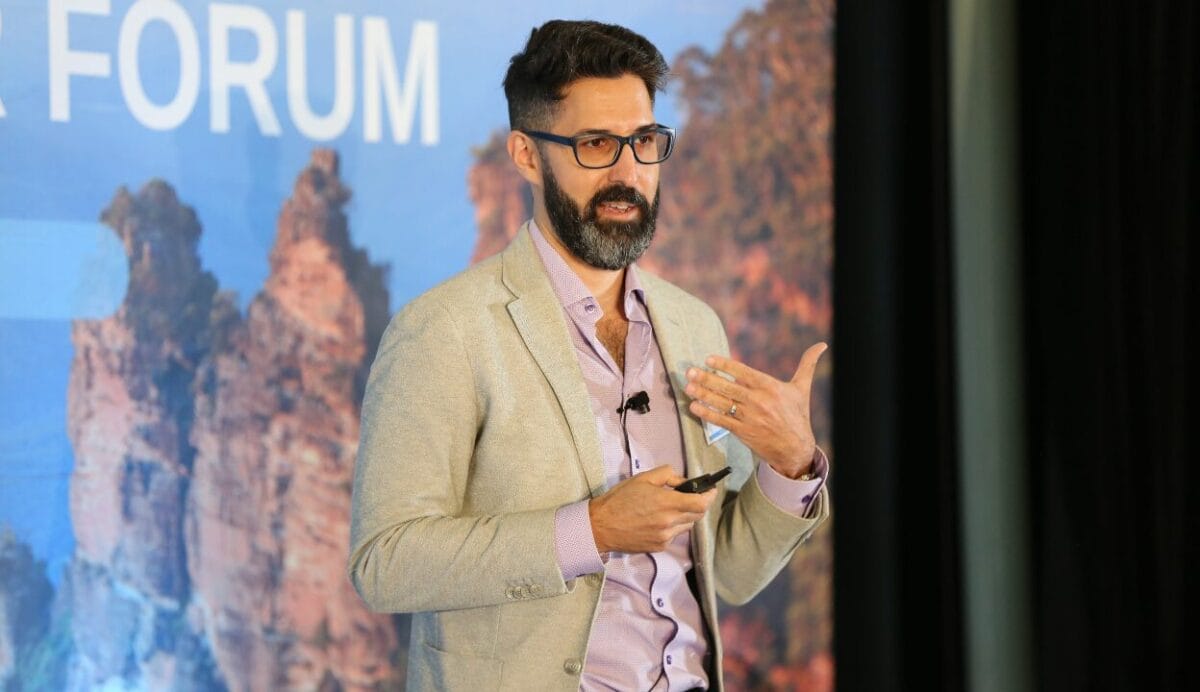
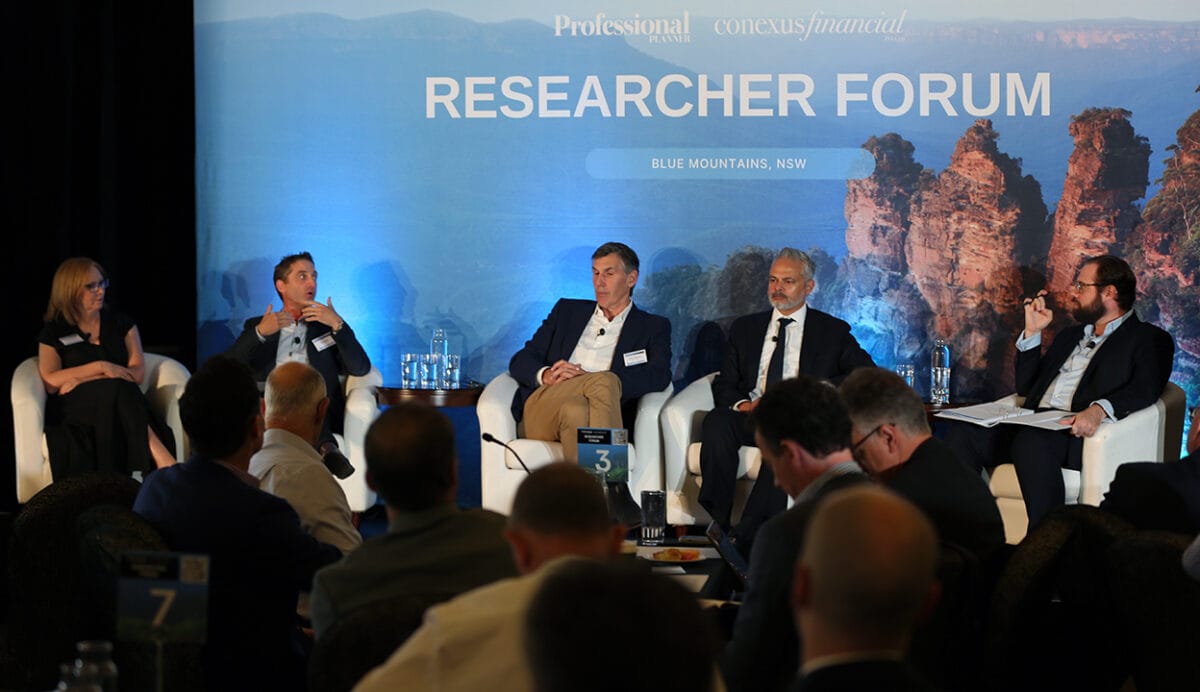
The Professional Planner Researcher Forum in the NSW Blue Mountains heard that researchers and asset consultants are under pressure to prove and improve the quality of their processes.
The issue of research quality is intensifying as the popularity of managed accounts grow and attention turns to the processes and systems that underpin their construction. ASIC has started legal action against research firm SQM over its role in issue ratings on the Shield Master Fund.
Lonsec Research chief executive Lorraine Robinson told the forum that the firm has invested heavily over the past three to four years in its systems to ensure its process is robust and consistent and to give clients confidence it can be relied on.
“Looking forward now, we’re looking at a client base that obviously is described as a ‘mosaic’ of large dealer groups right through to smaller, self-licensed groups, and we need to be able to offer a service to each of those groups that allows them to utilise the structure they have, but meet the regulatory requirements that are and will be continuing, we think, to increase,” Robinson said.
Robinson said research has moved well past the point of a firm handing a licensee or an adviser a list of products and saying “off you go”, and has moved into the realm of being an adviser’s or a licensee’s trusted parter, providing them with “the tools, the information and information in such a way that it’s not just, ‘Here’s a 10-page report, dig into that’.”
Jamie Wickham, a former head of Morningstar in Australia and now partner in private wealth firm Minchin Moore, said the firm has sufficient scale to do a lot of things itself but is still a user of external research.
“We use a lot of market data, a lot of economic data. We’re effectively, in some ways, operating the same way as a research house, as an external asset consultant, in that we’re doing asset class reviews,” Wickham said.
Deep research
Minchin Moore is doing deep research into asset classes and has spent 12 months reviewing the defensive part of the portfolios it builds for clients.
“The investment committee is knee deep now looking at international equities and how we can optimise that part of the portfolio,” Wickham said.
“We’re gathering as much information as we possibly can. We’re looking at product availability where we need it.”
The benefits to advisers of managed accounts have been well articulated, but the benefits to clients may not have been equally well defined.
“It’s like anything implemented in the right way,” Wickham said.
“Then they should have benefits for clients, whether that’s freeing up the advisers so they’re more efficient, so they can spend more time with their clients; [or] the ability to substitute securities within the managed account to the extent they have different preferences.”
Wickham said the firm is building bespoke portfolios for clients, systematically rebalancing every six months and taking client preferences into account.
“To the extent that you can run a program that is supporting the adviser, the adviser is using that time to better support the client, the portfolio is reflective of the client objective, and the investment program design has been put in place by the adviser, and those things are all connected, then it should be in the best interest of the clients,” Wickham said.
“Then they’re an appropriate structure.”
Entireti Group chief investment officer Aman Ramrakha said a key issue addressed by the rise of managed account is simply that there aren’t enough advisers to go around.
“Within our ecosystem, whether it’s technology, whether it’s things like managed accounts, the basic premise is, ‘Can I get an adviser to look after more clients?’, in a simplistic sense,” he said.
Empowering advisers to look after more ongoing service clients “may go some way in assisting in the supply-demand imbalance”.
“Efficiency and the ability to look after more clients is an initial reaction and managed accounts play a big part.”
The passive challenge
The forum heard that the continued rise of passive investing as a strategy is a challenge to the value proposition of researchers, but even the index or ETF end of the market is facing challenges.
Josh Persky, CEO of Briefcase, a firm that helps advisers build and manage personalised portfolios, said the flow of money to passive is not going to change any time soon.
“There’s 15,000 ETFs on 81 exchanges, wrapping their arms around $17-odd trillion dollars. That’s more than I make in a year,” he said.
“We know that it’s very much acceptable in the Australian market. It’s a little bit slower relative to what we see in other markets, but what we’re starting to see is people go, ‘This is great’, but the way that most people get index exposure is through an ETF or a unit trust.”
Persky said that what’s emerging is an approach to index investing that can be likened to the difference between CDs and streaming services: if a CD has 12 tracks on it but you only like nine, you only need to stream nine. In the same way, if an index has components an investor doesn’t like, a bespoke index can be created, minus those components.
“So we thought, is there a way to be able to embrace the index world, give people a piece of technology to approach [indexing] the way that they want to? And that’s essentially what we’ve built,” Persky said.
Getting alpha into portfolios
Lonsec’s Robinson said she could not envisage a world where every client is 100 per cent passively invested.
“You’re still seeing people look for ways to get alpha into their portfolios,” she said.
“You definitely will see a probably greater need for real in-depth research around those sorts of products. You also do need ongoing research around your ETFs.”
Robinson said the research industry is well supported by the ETF providers and “our ETF research is some of our most used research downloaded out of our systems”.
Ramrakha said the Entireti business is in many ways a traditional licensee research function, with a team of the scale required to support as many as a thousand advisers, which is now unusual, although it was ponce commonplace.
“Those big teams no longer exist in licensee-land, and to some extent it’s a cyclical thing.”
When Ramrakha started in research in 2007 at Commonwealth Bank, he was part of a team of two and research was largely outsourced. But then the Global Financial Crisis hit and pressure from the regulator saw the research team expanded.
“If you’re a licensee [or] you’re an adviser, you’re on the hook for everything you do, so licensee teams started to build out. They became bigger. If I looked across my peers at the other banks, we were all starting to build big teams.”
Post-royal commission, banks largely quit the advice space and research teams shrank or were disbanded.
“So some of this is cyclical,” he said. “But I think at the end of the day it is well recognised in licensee-land that the adviser is on the hook, and by inference, the licensee is on the hook.”