

Morningstar’s Australian arm will start offering paid product ratings, dropping a core business philosophy that separated it from the local market.
Starting from June 2026, fund managers or financial product issuers in Australia and New Zealand will pay a fee to Morningstar for the preparation of a Medalist Rating with the goal to transition to all ratings being funded by the issuer.
In the meantime, Morningstar will continue to provide coverage of Australia and New Zealand- domiciled funds without applying any charges to fund managers or financial product issuers for the preparation of an associated Medalist Rating.
Morningstar Australasia managing director Peter Bryant said the decision was made being mindful that this was the prevailing approach in the Australian market.
“It allows us to expand the team going forward to meet the needs of the market,” Bryant told Professional Planner.
“As more products are released and issuers develop strategies, it’s a business model that allows you to be responsive to that and continue to invest in the team.”
It’s a departure from the researcher’s long-time subscription-based model which Bryant said will continue.
“Our analytical process and methodology remain the same as the global methodology*,” Bryant said.
“The analysts are operatically physically separate from the commercial teams. I recognise there will always be that perception of conflict with this model, we’re taking the management of that conflict very seriously.”
The decision comes amid vigorous debate at the Professional Planner Researcher Forum this week, which Bryant attended, about the future of the issuer-pays model.
“We think this is the correct, sustainable model that has proven in the Australian market to be effective,” Bryant said.
“Regardless of what else is going on in the sector we’re confident this is the right model that allows us to keep investing in the team and investing in research in the Australian market.”
While the forum has hosted debates about the conflicts of the manager-pays model, ASIC’s legal action against SQM has again raised the existential question of whether it is sustainable.
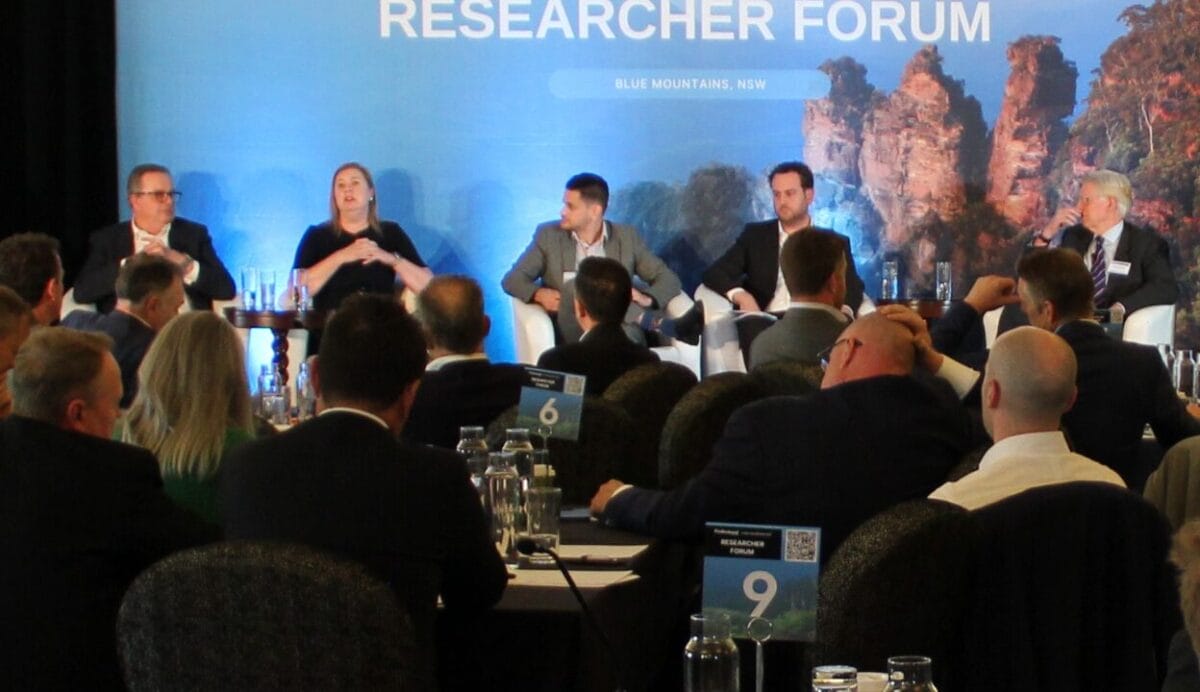
Australian Fund Monitors chief executive Chris Gosselin told the Researcher Forum that fund managers will talk about the necessity of getting a rating to get on to platforms and approved product lists but not about getting an in-depth research report on their product.
“You can dismiss this rating concept if you want, but the other side of the industry, the product issuer looks at it as a rating,” Gosselin told the Researcher Forum this week.
“[Advisers] look at it as a piece of research. If you have a look at any fund manager’s website, it will show the rating, it won’t show the research.”
Xavier O’Halloran, CEO of Super Consumers Australia, pointed to peer consumer group Choice as the leading example of a subscriber-driven review model which the financial services sector should try to replicate.
“Is it as profitable as the models out there that are selling click throughs to products? Not even close, but it has an integrity and role of trust in the broader community,” O’Halloran said.
Gosselin said a system where product issuers pay for ratings or research is ultimately going to continue to lead to conflicts that will be pinpointed in a post-mortem assessment.
“Whilst you have that conflict, you have to question the independence of the research,” Gosselin said.
“Research has developed more and more as a marketing [tool] by fund managers and product issuers than [as] a hardcore look at some of the underlying products.”
Insignia Financial CEO Scott Hartley agreed that product issuers paying for a product rating is “problematic”.
“Not quite sure how you solve for that, but it is a problem and it requires the research to be fiercely independent even though they’re paying for it, to the point of having the risk of not being paid for it,” Hartley said.
“Your integrity as independent researchers is your value and if you don’t do that it will destroy your value.
“Interestingly, SQM become very popular rating SMAs [separately managed accounts] because the other research houses conflicted themselves out of rating SMAs because – in their own words – they became fund managers. They wanted to have their own SMA and their own funds.”
Morningstar has also announced several updates to its Medalist Rating methodology which will apply across all markets and will go live globally in April 2026.
The ratings scale will remain a five-tier system: Gold, Silver, Bronze, Neutral and Negative.
Funds will now be evaluated against their Morningstar category average rather than a benchmark, which aims to help investors more easily identify Medalist options within a category and make meaningful peer comparisons.
A new price score (ranging from -2.5 to 2.5) will explicitly reflect whether an investment fee is a “liability or competitive advantage”, subtracting from or adding to the overall rating.
Medalist Ratings will be determined by a simple combination of fundamental pillar ratings (people, process, parent) and a Medalist Rating Price Score, increasing stability by eliminating a forced distribution of ratings that caused ratings to change based on updates to other funds.
From 31 March 2026, Medalist Ratings based on any algorithm-driven people, process and parent pillars will be withdrawn from Australia and all ratings in Australia will be produced qualitatively by Morningstar’s analysts.
*This article was edited on 5 December 2025 to amend a quote from Peter Bryant.