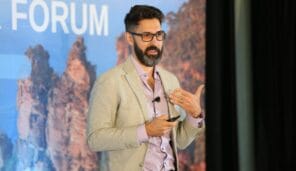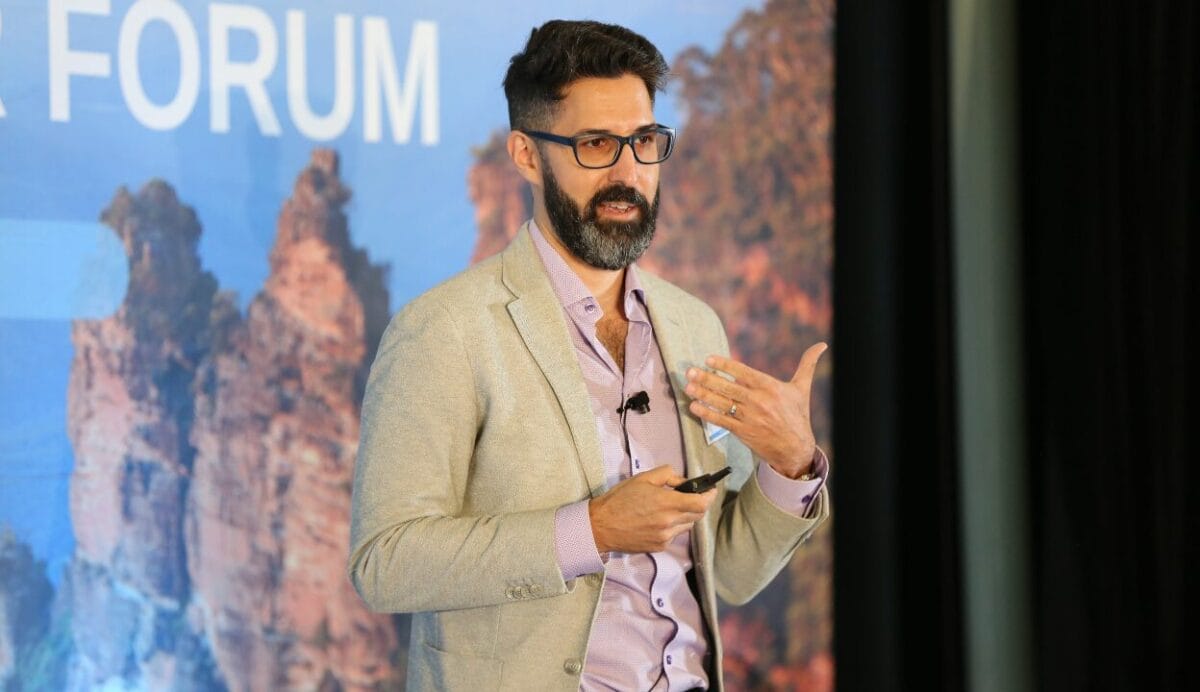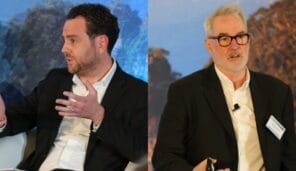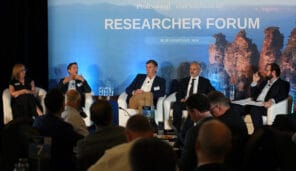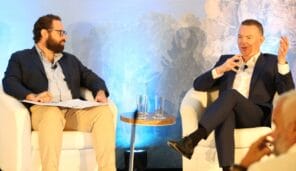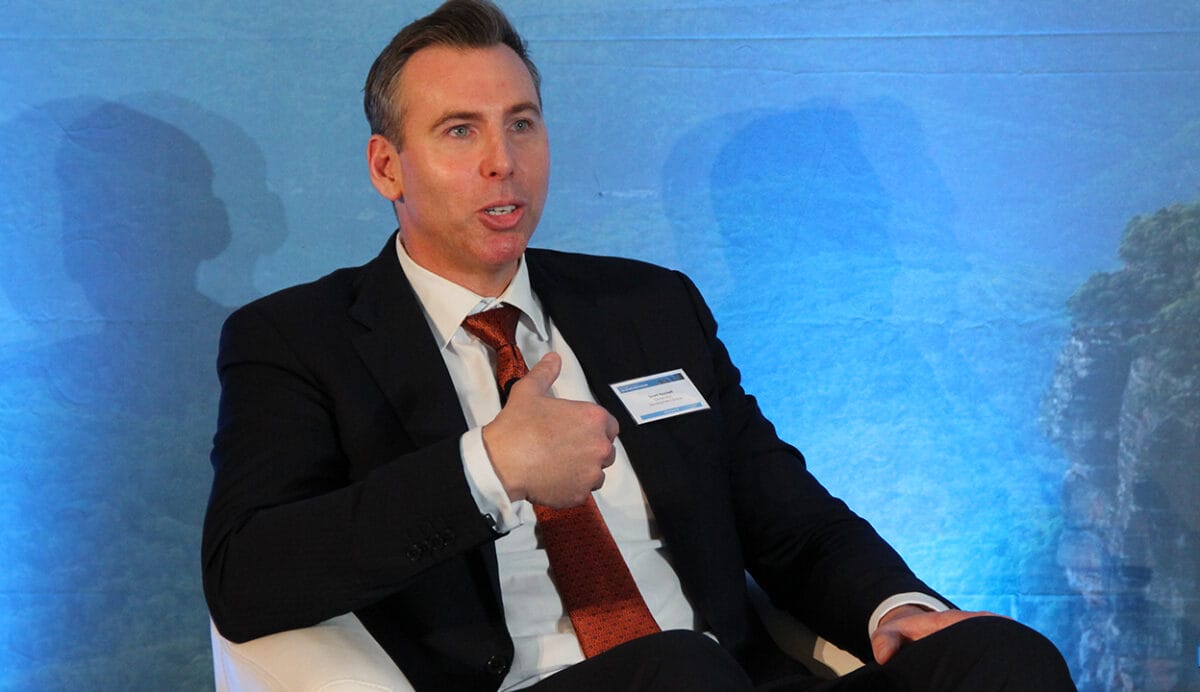

Few Australians appreciate constant changes to superannuation rules as much as Grant Hackett, the former Olympian turned chief executive of Generation Development Group.
Since 2017, when GDG emerged from the remnants of Austock, the company has transformed from an ailing fund manager with $720 million under management into a listed diversified financial services powerhouse with more than $4.4 billion under management (or potentially $33 billion depending how you count) and tentacles spanning investment and retirement solutions, research and asset consulting.
Hackett credits the government’s perennial tinkering with super, particularly the wholesale changes introduced in 2017, for “turbo charging” the acceptance and popularity of investment bonds, the group’s flagship product.
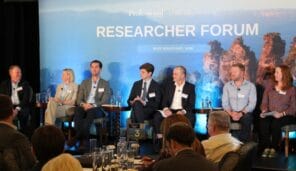
“[GDG chair] Rob [Coombe] and I had been looking at investment bonds in 2014 because we knew that they were the most tax-effective solution outside super, but it wasn’t until the 2017 reforms that we started to see some great results,” he told the Professional Planner Researcher Forum earlier this month.
Since then, flows into the group’s Generation Life investment bonds have gone from $100 million a year to $100 million every three weeks.
If it took three years for GDG to break into the investment bond market, it took only two for Coombe and Hackett to execute plans to get into research and separately managed accounts (SMAs).
In 2018, the pair identified an opportunity to expand their footprint with advisers by providing investment research and SMA solutions. In 2020, GDG acquired a 37 per cent stake in Lonsec, later buying the business outright in 2024. In early 2025, it doubled down on its managed accounts play with the $320 million acquisition of asset consultant, Evidentia, which manages around $29.6 billion in managed accounts.
Acknowledged conflict
Hackett acknowledges the conflicts that exist when a product manufacturer owns an investment research house and an asset consultant that advises financial planning firms and builds portfolios on their behalf. On top of all that, there’s GDG’s newly inked partnership with BlackRock, which acquired a minority stake in the group in May 2025 in the asset management giant’s first ever balance sheet investment in Australia.
Like Hackett, BlackRock’s Australian country head Jason Collins is a protégé and close confidant of Coombe’s, going back to the late 1990s, when Coombe led BT Financial Group and Collins (a former financial services journalist) served as his trusted head of corporate affairs.
“There is a real growth opportunity in the managed account space and bringing together the number one and number two players, in terms of total size, has been great for our business but there is an inherent conflict having an asset management business but also rating some of the managers that might be used as part of managed account portfolios,” Hackett said.
To manage those conflicts, GDG’s three subsidiaries: Generation Life, Lonsec and Evidentia, operate independently with their own CEO and management teams. The only shared services are finance and accounting, and human resources.
Lonsec does not rate Generation Life’s products.
“This model is definitely more expensive because we could centralise everything and have one executive team, but we’ve chosen to do it this way for governance reasons because we think separation drives better performance and accountability,” Hackett said.
“This structure creates a no-excuses environment. It’s very much a high-performance culture [at GDG].”
“There are three different sets of equity plans that sit around those businesses and there’s no interdependence on performance. For example, if Felipe [Araujo, Generation Life CEO] does a great job or not-so-great job at Generation Life, it’s not going to impact the remuneration of Mike [Wright, CEO] at Evidentia.”
Of course, as shareholders in GDG, which joined the ASX 200 in April 2025 and currently has a market capitalisation of circa $2.3 billion, it’s in the leadership teams’ best interests for every part of the business to perform strongly.
Structural tailwinds
Hackett is unfazed by the potential regulatory blowback of the Shield and First Guardian collapse on research houses like Lonsec, despite current legal action against SQM Research. He says he backs the advent of public policy that promotes independence, transparency and strengthens consumer protections.
Asked whether the increased regulation might turn the “structural tailwinds” GDG is known to favour into a ‘structural headwind’, Hackett said that depends who you are.
“It’s only a structural headwind if you’re doing the wrong thing and conflicts aren’t disclosed and properly managed.
“We are very, very conscious of the optics because we see the potential for greater attention on that [managed account] space, but we are an independent product manufacturer that works with all licensees and IFAs.”
“We deal with all the big asset managers too. We are agnostic in terms of who we choose, as long as they are best in class. That independence will continue to be a strength moving forward.”
When it comes to GDG’s competitive moat (a common investment term and acronym to describe a company’s structural advantages over competitors) Hackett believes the group’s three subsidiaries are a standout in terms of Margin, Operations, Advantage and Total addressable market.
If he had to point out a weak link, it would be Generation Life’s lifetime annuities, although they should be the group’s biggest seller, he said.
“It’s funny that the only loss-making part of our business has the biggest addressable market, with an additional 2.5 million Australians entering retirement in the next decade and a government that’s stuck in a difficult position,” Hackett said.
“On one hand, they don’t want everyone spending the money from their account-based pension once they hit retirement because they don’t want them relying on the age pension but, on the other hand, they are seeing a lot of people start and finish [retirement] with the same balance because they’re effectively self-insuring.
“Some people are living off the paint on their wall to survive through retirement, which is not fair. Getting this right is really, really important, given the baby boomers are moving into this phase of life.”
Committed to retirement and longevity
Despite the relatively slow take up of annuities, GDG is committed to offering retirement and longevity solutions, and other investment products such as managed discretionary accounts (MDAs). It is prepared to use its balance sheet, if required, to continue developing innovative solutions.
As an APRA-regulated entity, through Generation Life which offers investment bonds, lifetime annuities and funeral insurance, Hackett understands the importance of maintaining capital adequacy requirements to ensure strong capital support and confidence for policyholders.
GDG is in a very strong financial position, with $100 million on the group’s balance sheet and just $40 million of debt. It could “easily” raise capital, if required, to fund its short-to-medium terms plans including new products and M&A, Hackett said.
“We’re very conscious of remaining independent if additional capital requirements come in,” he said.
“It has been spoken about MDAs that there might be some capital requirements. We’d be in a strong position to place that aside. We do it already with our investment bonds and annuities, and we already have operational risk capital requirements in place. We’re also looking at some more products with BlackRock which would require a little bit more capital.”
“As long as the return on capital stacks up, then it’s fine to put that aside. We are very aware of the changing landscape and that the requirements might look very different in 12 months’ time.”