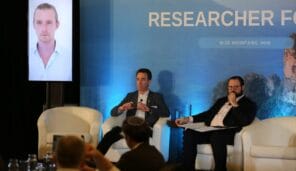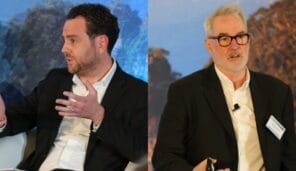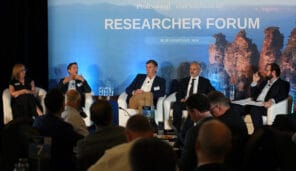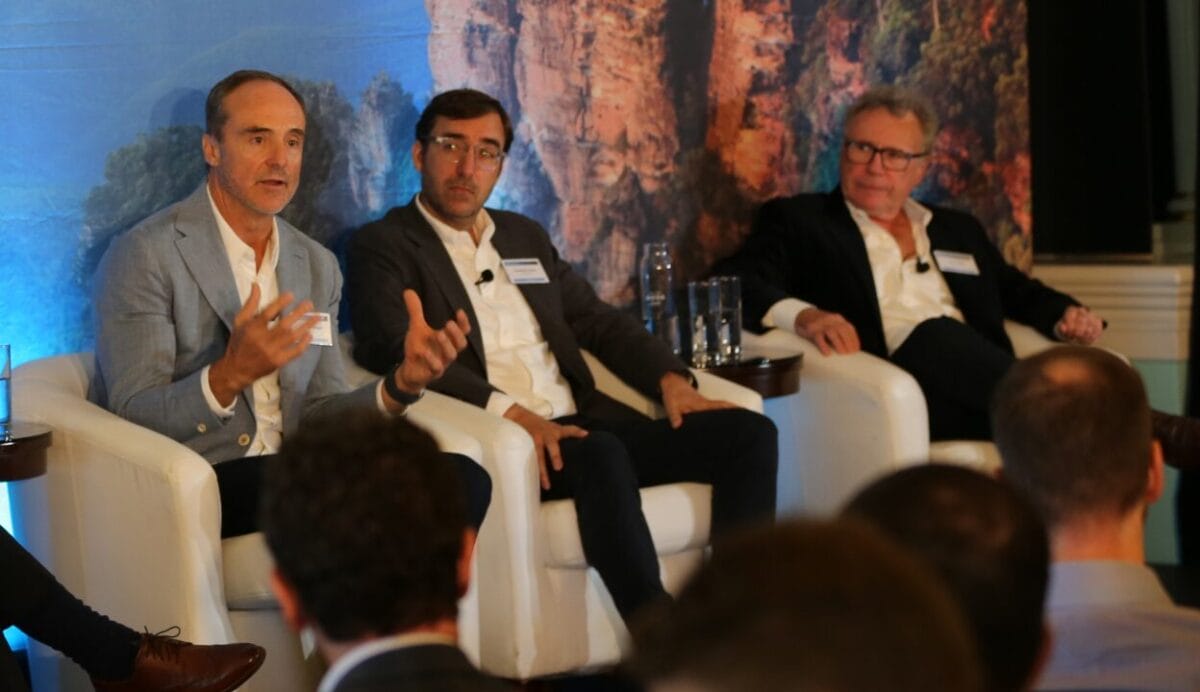

As asset consultants get acquired by bigger financial services players, the key question is how they will maintain their governance guardrails, the Professional Planner Researcher Forum heard.
The past year has seen two well-known asset consultants, Evidentia Group and InvestSense, acquired by major financial services providers.
Evidentia was acquired by Generation Development Group in February, and GDG, which owns Lonsec, split the companies into three different verticals each with their own CEOs: Generational Life (led by Felipe Araujo), Lonsec Research and Ratings (Lorraine Robinson) and Evidentia Group (Michael Wright).
Lonsec Investment Solutions, the investment management part of the research business, was folded into Evidentia. Furthermore, the researcher stopped rating Gen Life products.
“Where there’s a clear [conflict], we just stop,” Wright told the Researcher Forum.
Betashares acquired InvestSense in July, forming a new business called Trellia Wealth Partners.
The $8 billion Trellia would operate as a standalone business, backed by Betashares Financial Group which has slowly grown from being an ETF provider to also owning its own superannuation fund.
InvestSense partner and portfolio manager Jonathan Tolub said ASIC is more worried about vertical alignment between advice and product, and that his adviser clients are completely independent of his business operation.
Those concerns from ASIC come as the regulator is in the midst of a review into managed accounts.
“At the end of the day an SMA manager is a product manager,” Tolub said. “We are an investment house, so we create vertical integration on the product management side but never crossing the advice.”
Tolub said Betashares is treated like any other product manufacturer.
“We’re not staying away from Betashares product, that wouldn’t be the best interest to my clients, but if I bring a Betashares product it’s because I built a case that it’s actually cheaper and better than everything else that’s out there on the market,” Tolub said.
According to research from CoreData presented before the session, 36 per cent of advisers surveyed are using an asset consultant.
Some 76 per cent say business efficiency is the primary reason for using an asset consultant, along with the ability to see more clients (46 per cent), lacking internal expertise (44 per cent) and getting better performance (36 per cent).
Lonsec was used by almost a quarter of respondents (24 per cent), followed by Morningstar (11 per cent), Evidentia and Zenith (7 per cent each) and Betashares (6 per cent).
But of those who don’t use an asset consultant, 90 per cent say that will continue.
For those choosing an asset consultant, half believe value for money is the biggest driver for their choice. About a quarter say it’s range of services, with around 18 per cent citing reputation.
Wright said Evidentia was born out of advice-led research.
“If you fast forward to 2018 when Evidentia 1.0 was birthed… the [Hayne] royal commission and the impact that had on the advice industry, particularly the big organisations existing and all these aligned research businesses, all these aligned practice managers, regional managers – they were all gone and they’d all supported these advisers,” Wright said.
InvestSense celebrated their 10th anniversary last year, but Tolub said in hindsight they might have been too early to the game.
“The rate of adoption of SMAs [separately managed accounts] was essentially zero,” Tolub said.
“You would go around meeting advisers and it’s not like people didn’t know about SMAs. There was absolutely no willingness to switch to something else and primarily because you had to switch to a new platform as well and there was a barrier for most advisers.
“The most common comment I heard at the time was if I was starting a new advice business today I would definitely use an SMA but I’m not going to transfer all of my clients because it’s too much work.”
Tolub said that, at the time, the firm might have failed at winning the hearts and minds of the broader industry, but there were others doing a better job.
“The royal commission was a catalyst for all those things coming together and people realised that there was actually a need to change in where we are today,” Tolub said.
But while larger institutional plays are driving asset consultant M&A, Michael Furey and Tim Farrelly merged their one-man band consultancies rather than seeking out larger capital providers.
Farrelly, co-chief investment officer in the new firm Delta Portfolios, said a major catalyst for teaming up was the perception clients had trepidation over working with a sole operator and the key person risk that entails.
“Oddly enough, people seem to be happy with two people,” Farrelly said.
“The whole succession/key person is more of a risk for us than the client. I don’t think anyone in this room is so good at what they do that if they got hit by a bus that they couldn’t find someone else in this room who’s going to do a pretty good job as well.”