
Imagine a warning system that is so subtle that it falls silent just before disaster strikes. That silence is happening in our profession right now.
As the wealth market consolidates for scale and efficiency there are, like it or not, unintended consequences for clients. Consolidation, conflicts of interest and scale are once again reshaping the investment advice ecosystem. De-facto composite control of more and more of the value chain – including investment research, investment products, REs and RSEs, investment portfolios, investment committees, adviser practice ownership, practice management and technology services – is re-concentrating influence into fewer and fewer hands.
This is vertical integration 3.0, happening in front of our very eyes and at the hands of the elite and private equity, and it is all too often under-recognised and under-managed by an arguably naïve or overstretched ex-post regulator.
When decision-making power and ownership narrows, and especially when conflicts of interest also exist, whether it’s managed or not managed, structural bias embeds itself into the system. That bias limits choice, it stifles product innovation, it influences flows and prices, and it reduces the quality and diversity of solutions and the outcomes for clients.
When it’s allowed, it suggests that the system is flawed; when it’s tolerated it suggests that our individual and collective judgment is flawed.
It breaches my conviction around the philosophy of conscious capitalism. Structural bias, not competition and certainly not malfeasance, is the greatest threat to the future of quality investment portfolios, quality advice, and quality outcomes. This is the “fiduciary gap”.
Our profession must harness efficiencies of scale without sacrificing independence and quality. The long-term best interests of clients must remain paramount, especially in an era where quality defined benefit superannuation is paramount. The profession needs to close the fiduciary gap.
Boom and bust
I’ve got the advantage of having been witness to and part of two major vertical integration boom-and-bust cycles in 50 years of financial services, which is now called the investment and wealth management community.
First, when I just finished university with a freshly minted psychology degree, I became part of vertical integration 1.0 – the tied agency regime made up of the only major providers of individual wealth management: the insurance companies. Vertical integration 1.0 collapsed between about the mid 1970s and the mid 1980s, due to globalization coupled with deregulation, leading to a proliferation of investment products, and then the share market crash of 1987.
When banks and life insurance companies thought that they could recapture end-to-end ownership of the wealth management chain for their own benefit – through the 1990s and into the 2000s and 2010s – we had vertical integration 2.0.
Each cycle reshaped the advice landscape, and each left its mark on fiduciary duty. I’ve seen this movie twice before, and I reckon now in the 2020s I can see the Director’s Cut trailer for Chapter Three in front of my eyes.
The first two chapters ended badly – the second chapter really badly. There’s a fair chance that vertical integration 3.0 will end badly as well, unless we’re all dutiful.
On a knife edge
The extreme pressure of the social contract that all governments now have with user-pays, compulsory, defined-contribution superannuation means that the wealth management space is on a knife edge.
There is a fundamental social contract that got outsourced to individuals to manage their own affairs, away from what was previously defined-benefit, to defined-contribution.
A whole lot of agents were put in place, and we are among those agents. So, beware of the knife-edge of having any involvement in anything for which the government has an overt social responsibility.
The real questions are, am I right? Is there a fiduciary gap? And how do you figure out for yourself if there is one? And, in any event, should you care?
As the saying goes: why do people rob banks? Because that’s where the money is.
I’ve got three short stories to share from the coal mines.
The canary was the very early warning system for when the air in a coalmine turned toxic. The canary fell silent before the miners even noticed. Can you believe that until 1987 real canaries were still used in the coal mines? What a coincidence that this too was when fiduciary duty was also challenged in our profession.
The “canary duty” is fiduciary duty itself.
Toxic air
The silence in the investments and wealth ecosystem is when we stop speaking up for the value of independence. The toxic air is the structural bias creeping into product flows to ownership models, technology platforms creating insidious, conflicted vertical integration.
Yes, vertical integration works, but should it be allowed by us to work? Our silence is a warning sign that the very foundation of trust is at risk. When fiduciaries fall silent, the whole system becomes vulnerable to unseen dangers.
When you see such conflicts, you should speak up, you should say something, you should give voice to fiduciary values. You should be bold, and you should have confidence that you have people around you who will ensure you are safe.
It’s like being a whistleblower for the investment and wealth profession. Remember, a key condition for the triumph of bad over good is for good people, when they see something, to not say something, and to not do something.
What you should do is to identify yourself as being part of a known community where fiduciary values are shared and where revealed values are the guide. But to see something, to be the canary in the investment and wealth coalmine, you need fiduciary trinoculars to see the fiduciary gap. Trinocular vision is not one lens, but three:
- Fiduciary duty: the moral and legal obligation to act in the best interests of clients, demanding loyalty and care beyond mere compliance, it sets the ethical foundation for trust and accountability, guiding every decision with integrity.
- Agency theory: the economic reality that incentives and conflicts of interest can distort decision making, highlighting the need to align interests between principals and agents, whether between, say, consultants and clients or, say, fund managers and consultants.
- Behavioral finance: The study of human biases and cognitive errors that influence financial decisions, reminding us that even well-intentioned actors can be swayed by irrational factors and subconscious influences.
You can think of these three lenses as a triangular framework for governance. Each lens, by itself, offers just insight, and it’s only when the three perspectives converge that the full picture emerges.
The trinocular vision reveals hidden conflicts and structural bias that single views miss. Trinocular vision brings the canary into clear and unambiguous focus. Then, when you see something, say something. Only then can we understand the breadth of the fiduciary gap and chart a clear path to closing it.
Building a bridge
The fiduciary gap is a chasm but there’s a bridge waiting to be built. Each of us decides, in this third little story, whether to widen the gap or lay planks across it.
Stewardship is a commitment to the act of continuously building that bridge. It requires ongoing commitment, collaboration and courage to span the divide. Every plank laid is a step toward ongoing trust, independence and integrity. This bridge is both a symbol and a practical pathway to closing the fiduciary gap.
You know, we don’t inherit fiduciary duty. We steward it. Our responsibility is not just to clients today, but to the profession tomorrow and to the population tomorrow. Stewardship means resisting structural bias, reclaiming independence and protecting the integrity of investment advice. By definition, we’re all stewards of fiduciary duty. It’s other people’s money, and mostly their retirement savings. In my view, the fiduciary gap is real. The question is not whether it exists, but whether we’ll close it, whether we’ll bridge the gap or allow it to widen; or indeed to widen it. Structural bias, not competition or malfeasance, remains the greatest threat to the future of quality investment portfolios, advice and outcomes.
This is the fiduciary gap closing. It is not just a challenge, it’s our profession’s imperative and our opportunity.
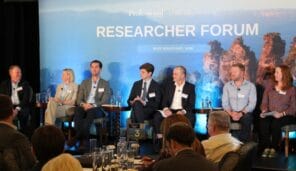
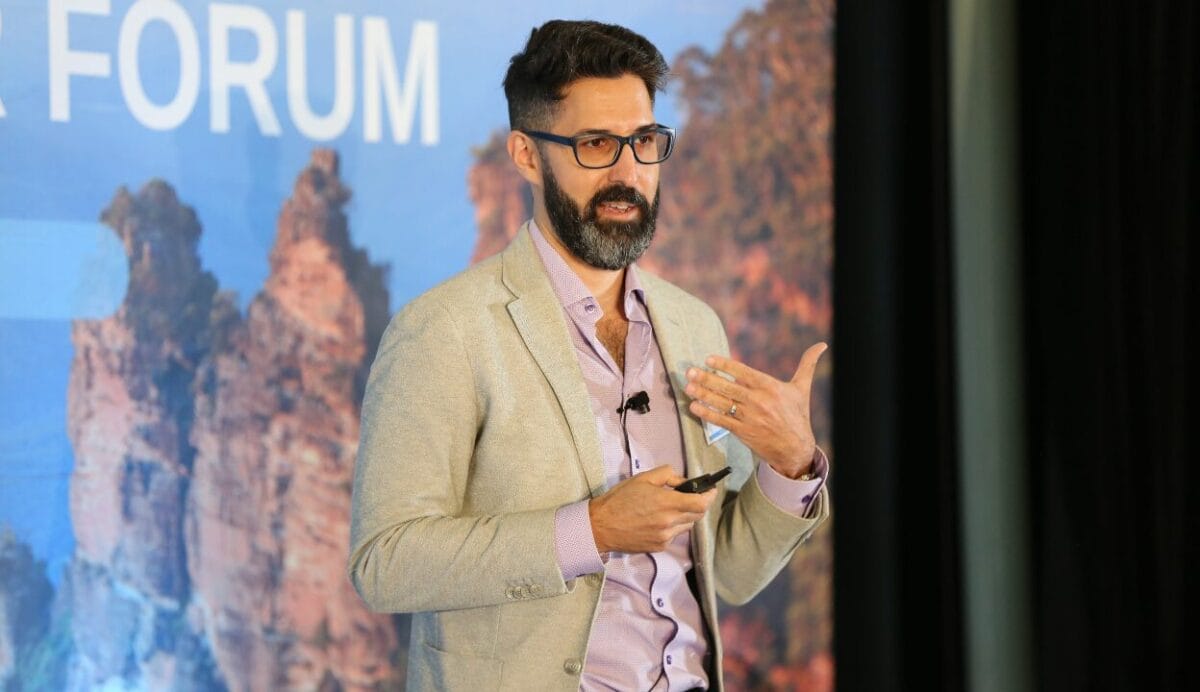
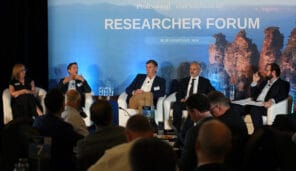
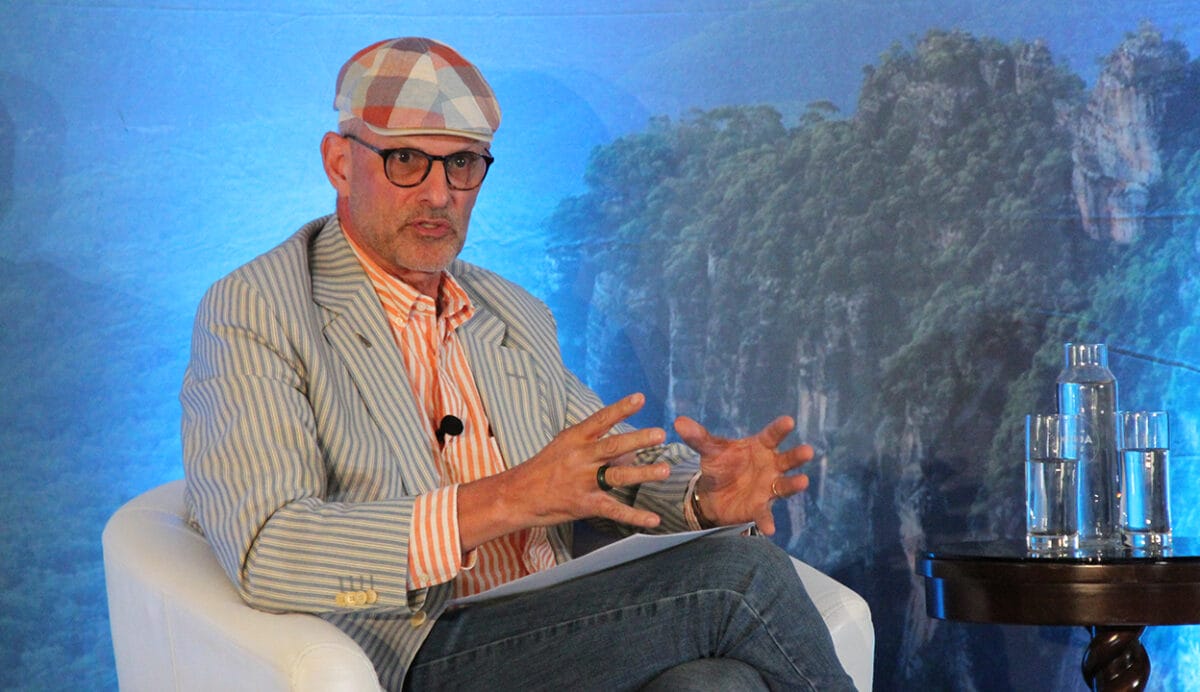
This is an edited transcript of a speech delivered by Graham Rich to the 2025 Professional Planner Researcher Forum.