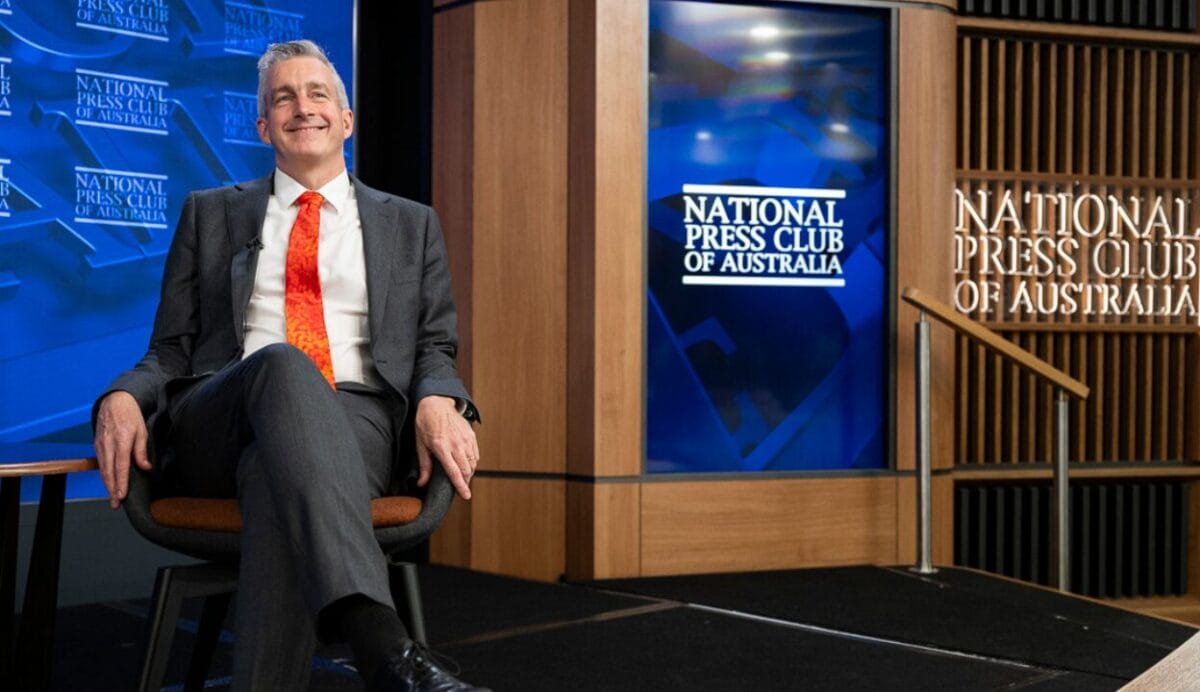

It was bold of AustralianSuper chief executive Paul Schroder to open his Wednesday address to the National Press Club with a joke about the Hayne royal commission.
When the sector is beset by regulatory woes for its failure to handle mundane administrative processes for its members – and fears of a government inquiry into their handling – Schroder rattled off a disclaimer that the information he was about to provide was of a general nature and cracked wise that Commissioner Kenneth Hayne said that you should “first obey the law”.
The joke was not included in the prepared remarks sent out to journalists ahead of the live speech. And as the sector comes under increasing scrutiny, including multiple live lawsuits against funds including Schroders own, it fell flat.
Schroder’s prepared remarks ran to nearly 4000 words, but only three of those words were “service” and none of those instances had anything to do with the member servicing failures that have seen ASIC drag AustralianSuper to court.
That they didn’t isn’t unexpected. It’s unlikely that the chief of Australia’s largest fund would use a rare public address – one made to a room full of journalists but also beamed out to millions of Australians on the ABC – to issue a mea culpa for matters that are currently before the court.
But the address was out of step with the scrutiny and expectations now being applied to Australia’s $3 trillion APRA-regulated superannuation sector. Few funds have much to write home about when it comes to their administration; ASIC’s investigation into claims handling was unsparing in its criticism of everything from their failure to record end-to-end death benefit claims handling times to the number of those claims closed within a three-month period.
As Schroder noted in his speech, six million Australians will be over 65 within the next three decades and funds “owe it to them to get [retirement] right”. ASIC made much the same point in its investigation of claims handling, saying that the issues it raised were that much more pressing for the fact that super funds would soon be dealing with a larger number of more engaged members who would demand better service.
To his credit, Schroder did try to grapple with that challenge in his address, saying Australia needs to build a “world-class spending system”.
“To do this, we need to meet members’ changing expectations of us. Super funds must run to keep up,” Schroder said.
“Members want strong returns. Personalised guidance. Secure digital tools. They want all of that in an app in their pocket, at a competitive price, from institutions they trust, at any time of day or night.”
ut how AustralianSuper intends to do that remains little more than a back-of-napkin pencil sketch, aside from Schroder requesting the government make changes to legislation to allow AustralianSuper to create its “account for life” and share relevant data with it to give it members a better picture of their retirement incomes – as well as making a vague reference to integrating AI into its guidance.
As Schroder himself said, this moment in history calls for “ambition”. But Australia’s largest super fund – and many other super funds – are sorely lacking in it. Some have made the bold but painful move to completely overhaul their administration, paying a price in both negative media coverage and member anger in the hopes that it will set them up better for the future that Schroder describes. Others languish in a member services environment not much better than what they had when compulsory super was first introduced.
Wednesday’s address to the National Press Club was a big moment for super funds but comes at a time when the compact the system is built on – the deferral of present-day consumption to underpin a dignified retirement – is more fragile than ever. Super funds need to do more to service the members that hand over 12 per cent of their income every year.
And if they keep getting it wrong, Schroder’s little joke about Kenneth Hayne might come back to haunt them all.