
Asked why AMP decided to exit the business of personal financial advice in 2024, the company’s chief financial officer, Blair Vernon, is alliterative.
“Cost, capital and complications,” he told the Professional Planner Licensee Summit in the NSW Blue Mountains.
“Complications” are perhaps a euphemistic way to describe the issues facing AMP’s loss-making licensee network, through which it was not just a service provider to self-employed advice businesses but in many cases a longstanding equity investor also.
Following a disastrous performance at the Hayne royal commission, which accused the company of criminal wrongdoing, the 175-year-old AMP spent the ensuing years transforming the business with multiple restructures and asset sales in order to focus on a set of go-forward priorities – then deemed to be platforms, banking, superannuation and advice.
But when CEO Alexis George took the reins in 2021 from her short-lived foreign predecessor, she knew a lot of work needed to be done to bring the once-mighty licensee business to a ‘break-even’ point, let alone profitability.
By 2023, the group’s financial planning business, AMP Advice, which included storied dealer groups AMP Financial Planning, Hillross and Charter Financial Planning plus minority stakes in 16 AMP-aligned practices, had overhauled its systems and processes, and finally looked on track.
This was no mean feat, especially during a period when the company was still recovering from the royal commission, made worse by what some institutional investors and market analysts argued was some poor executive and board leadership prior to George’s appointment.
Vernon attributes the turnaround of the advice business mostly to Matt Lawler, then managing director of AMP Advice, who got costs under control and navigated a class action against some former AMP practices.
“The cost issue was fixable, albeit hard work, but the issue of capital, and capital demand, not for the [advice] business itself but the underlying equity portfolio businesses, in terms of partnering with them for growth, needed to be resolved,” he said.
As the different divisions inside AMP vied internally for capital, the group eventually formed a view that it would not be adequately rewarded for deploying more capital into the advice business.
Furthermore, as an authorised deposit-taking institution AMP faced an additional layer of regulatory complexity not encountered by other advice entities, most notably requirements under the Financial Accountability Regime.
AMP concluded that, in the long run, these conditions would hinder AMP’s ability to compete effectively in the “fast-moving licensee landscape,” Vernon said.
“We could solve the cost issue, but we couldn’t solve the other two so then we needed to find a way to continue supporting our advisers and partnering with IFAs [independent financial advisers], and potentially executing a transaction,” Vernon said.
Jewel in the crown
Given the group’s long history and dominant position in financial planning, the decision to offload AMP Advice was a difficult one.
Since the inception of Australia’s financial planning industry, AMP has consistently been the country’s largest licensee, with the exception of a couple of years in the mid-2000s when Professional Investment Services briefly dethroned it. During the 1990s and 2000s, the group’s financial planners were affectionately referred to as the jewel in the AMP crown.
The board and senior management team entertained every possible alternative before formally commencing the sale process.
The search had begun for a partner with “capacity, capability and culture,” Vernon says, sticking with his preferred alliteration.
Lawler and his team, including Mark Ballantyne, then AMP’s general manager for equity partnerships, met with advisers around the country and openly discussed the challenges facing the business. They explored different options for the future and solicited feedback.
Determined to sell AMP Advice in one transaction, rather than break the business up, the group wanted a counterparty with the capacity and capability to run the four licensee brands, including dealer services provider, Jigsaw, and take the entire equity portfolio.
AMP employed a targeted approach and engaged a small number of parties.
“Throwing the doors open to everyone is a real time waster and erodes the value of the target business,” Vernon said.
After a comprehensive process, financial advice-specialist investor AZ NGA, and licensee network Entireti (formerly Fortnum Private Wealth) joined forces to enter a strategic partnership with AMP Limited to create a compelling offer for the group’s advisers and employees.
Under the deal, Entireti acquired AMP’s AFSL entities: AMP Financial Planning, Hillross, Charter Financial Planning, and self-licensed service provider Jigsaw. It later rebranded the collective business as Akumin and AMP retains a 30 per cent shareholding.
AZ NGA, led by high-profile industry figure Paul Barrett and backed by Italian fund manager, Azimut, and storied US private equity investor, Oaktree, acquired the equity portfolio.
“It has been a tough road for many individuals and organisations to get to this point, but the future is bright for both advice networks and advice practices.”
– Neil Younger
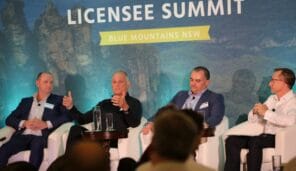
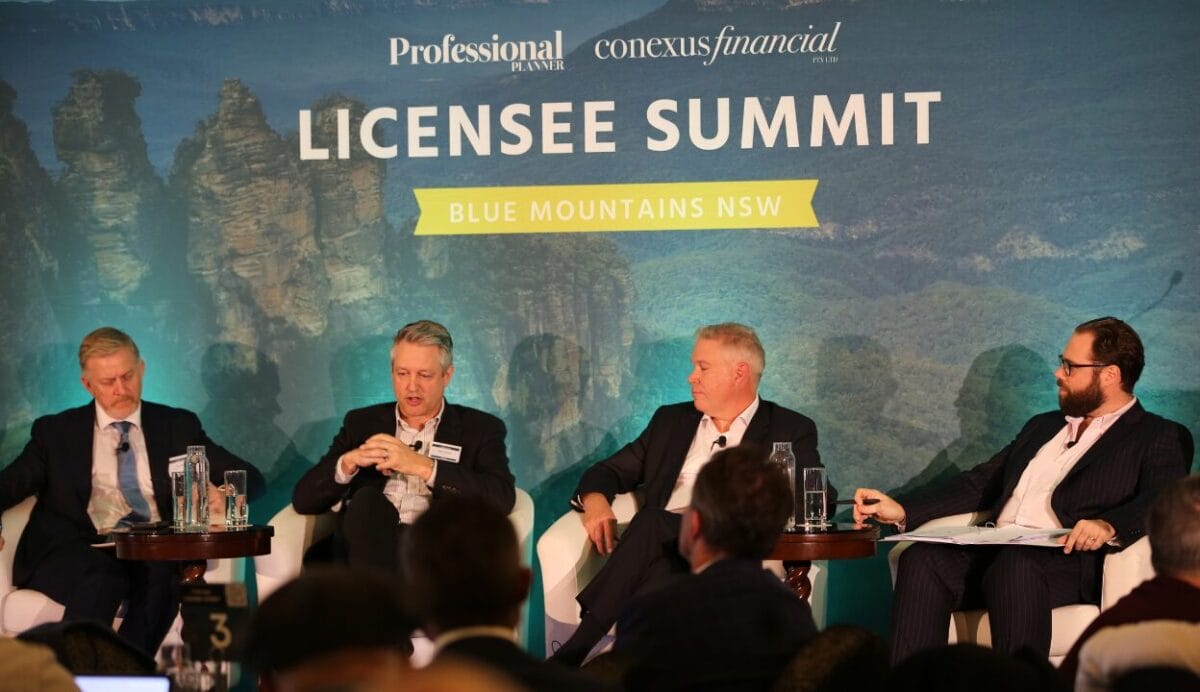
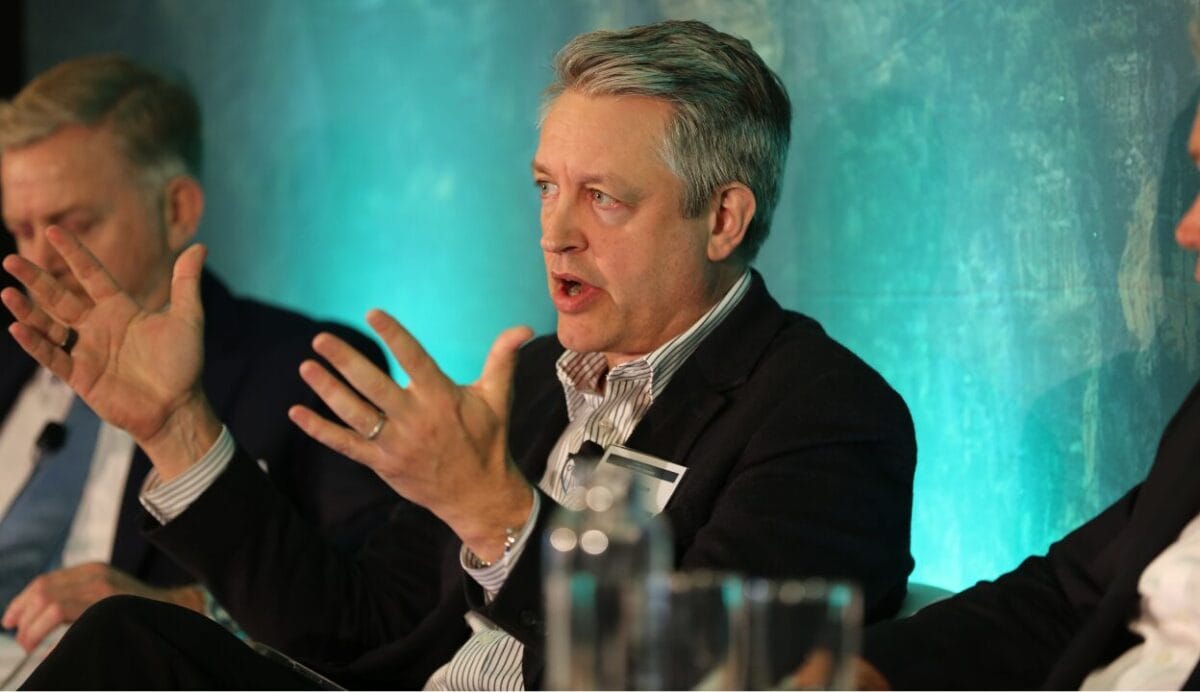
Speaking on a panel alongside Vernon and Entireti chief executive Neil Younger at the Licensee Summitt, Barrett described the deal as “momentous”.
Despite completing over 100 transactions since AZ NGA’s inception in 2004, this was the deal that Barrett coveted the most because of its potential to transform AZ NGA.
Less than a year earlier, in late 2023, Barrett and Younger (once colleagues in previous lives at ANZ Wealth Management and the Commonwealth Bank) backed AZ NGA and Entireti into a tripartite alliance with Australian Unity to acquire the latter’s advice business.
As part of the deal, AZ NGA acquired AU’s employed adviser and corporate superannuation services business, and Entireti purchased AU’s AFSL Australian Unity Personal Financial Services and continued providing licensing and business support to the group’s 155 self-employed advisers.
A blueprint was created for the AMP deal, albeit on a smaller scale.
The AMP transaction involved over 1300 financial advisers and thousands of employees.
“I could see that AMP wanted to deal with one counterparty not 10 counterparties, and ease of transaction was very important to them,” Barrett said.
“I called Neil and said, ‘let’s do this again, only this time the target’s a little bigger’.”
Barrett shot an email expressing interest to George at AMP, who he also previously worked with when George was deputy CEO at ANZ Wealth Australia.
“We set out to convince Alexis and the AMP board that we were a credible counterparty,” he said.
“We didn’t just answer the questions in the RFP [request for proposal], we responded in a way that illustrated what life would be like post-transaction. We painted a picture of the future.”
That picture was painted in an official pitch-book – the cover of which was adorned with a colourful butterfly and hangs separately in the offices of Vernon, Barrett and Younger to remind them of their cultural alignment.

The best defence
Despite the reputation damage that AMP had suffered through the royal commission, Barrett said the AMP always had some very attractive, high-quality businesses within its licensing network.
“We’d actually been knocking on their door for some time, but we could never get in,” Barrett said. “AMP ran the best defence we’ve ever come across.”
For AZ NGA, which says it is on a mission to disrupt the financial services value chain to put advice at the very top, the AMP transaction was “very much on strategy”.
AMP’s ASX release on 8 August announcing the sale of AMP Advice to AZ NGA and Entireti was a shock to the market, given it had committed to advice multiple times over the period in which it jettisoned its life insurance and asset management arms.
But for Younger, the ultimate buyer of these assets, the decision made sense “directionally” despite AMP’s best efforts at reform.
“Matt [Lawler] and his team had done a tremendous job to improve the business and get it to a certain financial position but the next part of that journey was going to be more challenging,” he said.
“We could accelerate that journey because we had the infrastructure and economic model, and we were nimbler than AMP so we could move faster.”
Younger and Barrett described AZ NGA and Entireti as the “natural owner” for AMP Advice. Vernon agreed.
But they were not the only prospect. And Barrett freely admits that the bidding party still had to prove its credentials.
A big part of the success formula was getting the underlying advisers on board, the three executives concurred.
“The advisers were critical to the outcome and they were very mature,” Vernon said.
“We would not have proceeded if advisers unanimously said this was the wrong path but they were ready. Even though they had originally been part of an aligned model, they had evolved and wanted to move away from it.”
A year on from the transaction, Younger says the ex-AMP contingent – still led by Lawler as Akumin CEO under the Entireti umbrella – are making a positive contribution to the company’s culture and he’s bullish on advice and licensing going forward.
“It has been a tough road for many individuals and organisations to get to this point, but the future is bright for both advice networks and advice practices,” he said.