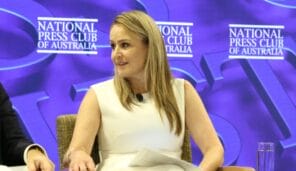

In its heyday in the 1980s, the Women’s Investment Network boasted 90 financial planners in nine locations around the country. At that scale, WIN would be a significant advice network even today, except that after the business was sold to MLC, it failed to flourish; and its founder, Virginia Dowd, moved on to other things.
Those other things included establishing Money Solutions, now Link Advice (part of the Link Group), and today, Dowd is business development manager at SuperEd, a company co-founded by the former head of Vanguard Investments in Australia, Jeremy Duffield.
While financial planning may have changed in the 30-plus years Dowd has been involved in the industry, some things remain constant. The same philosophy that underpinned WIN and Money Solutions now also underpins her current work.
Customers’ needs haven’t changed either, she says.
“They’re fearful. They have high unmet expectations – and I’m not talking about the people who have money; I think they are very well served, currently, by very good and experienced advisers,” she says. “What I’m talking about, which is where I started in the industry, is the small-to-medium-sized investor, and people who were starting to make some money and thinking, ‘What do I do next? What’s my next best step to build financial wellbeing?’ It’s really the mass, the middle of the market, and how we help people actually do better and understand the pathway.”
Dowd says financial planning has always been about helping individuals set and achieve financial goals. It was that simple 30 years ago, and it’s that simple now. It’s been complicated, or perhaps diverted from that focus, over the years, by a range
of issues, but it eventually always finds its way back to the same set of principles.
“It was teaching people how to set a long-term income goal for their retirement, how to set medium-term goals so they had a focus on what their next best step was to gain some assets to generate income – and how to manage cash flow, good cashflow habits,” Dowd says. “That’s the basic place that we started. And I don’t believe that, in terms of giving advice today, it has changed. The needs are the same.”
Some downsides of growth
Dowd says one striking difference between the 1980s and today is the size of the product range available to advisers and, by extension, their clients. The proliferation of investment options has had a downside, she says. Financial planning went through a period when manufacturers enthusiastically extended their product range and began to drive
the advice process, because every new product needed to attract a critical mass of funds.
“When I started, we had one small page of opportunities to give people, and now it’s enormous,” she says. “The market has become much more complicated, and…there’s been some [product] disasters over time, which has [helped cause] people to have a high level of mistrust of advice. I think [trust] is probably the lowest it’s
ever been in history right now.”
Dowd says measuring advice on funds flow or giving advisers incentives based on product sales inevitably creates a gap between what the industry sets out to achieve and what its customers need.
“The question I ask all the time is: Are we measuring the right things?” she says.
“We should be measuring the customer experience: Do you feel heard and understood?
Do you understand the advice? Are you confident you know what you’re doing, and why you’re doing it? Do you feel it’s the right advice for you and do you feel motivated to act on the advice? Most importantly, what we’re not doing is measuring the value proposition: Can you see how this advice has improved your progress towards your goals?”
Dowd acknowledges that qualitative assessments of advice are more difficult to frame and capture than hard compliance measures. But meeting the real needs of clients was the best foundation for advice in 1983 and remains so today. She says the reason financial planning grew as it did through the 1980s and into the 1990s was because relationships between advisers and clients were tight, and product was only a small part of the conversation.
“The adviser knew the client,” she recalls. “We had all the data. We knew their [financial] literacy. We knew what education they needed and what guidance they needed. You knew what they needed to do. The adviser held all that information – and they mostly did all that themselves.”
Focus on clients – for the WIN
Dowd says that, like all firms of its era, WIN received income from selling products. But she says it also integrated a fee-for-service component into its offering, for things like initial interviews, to ensure the business remained viable when advice did not lead to a product sale. She says it meant advisers could focus on the needs and the goals of the client, whereas basing advice too heavily on product would have created a divide between adviser and client.
“If we get straight into selling product, that’s what can occur,” she says. “I think that’s why people often feel they have not been sold the appropriate product – it’s not necessarily that they were not sold the right product, but sometimes they don’t understand where it fits in.”
Dowd says she started WIN after she realised her own understanding of financial issues was lacking.
“That’s when I started to do the study related to financial advice and I realised that there were a whole lot of other women like me who didn’t know or understand how to really make money work to give you more financial security and a sense that you’re making the most of what you’ve got over time,” she says. “That was in 1983. It seems like yesterday.”
Dowd says the key to WIN’s success was keeping advice simple.
“We used to say that even if you make $20 a week work for you to achieve your goals, you’re on the right path,” she says.
Excited about making things simple
WIN probably would still be thriving today, Dowd says, but in reality it was growing faster than her ability to raise capital to invest in the emerging technology of the day. And she admits, frankly, to being “a bit naïve, commercially, as well”.
The business was sold to MLC, which was then a subsidiary of Lendlease, but it quickly became apparent that MLC wasn’t committed to it.
At SuperEd, Dowd’s focus remains on the things she believes are fundamental to creating wealth and achieving financial security, which are built on education and access to the right advice at the right time. She says individuals often do not need a full financial plan from day one, so the aim is to enable access to bite-sized pieces of advice that are affordable, relevant and timely. It’s a natural evolution of the philosophy of WIN, which was developed further through Money Solutions.
“It’s about customer-centric, needs-based advice,” she says. “I have always come from the customer [perspective], and education is such a key to it all. That hasn’t changed. It’s how it’s delivered, and how we create the right business models, which are changing.
“Fee-for-service models are good, but it really does mean we need to embrace the digital age to develop personal ongoing journeys…and the ability to get access to advice at the moment you need it. It’s only a top-of-mind issue when something is changing in your life.”
Dowd reckons the work she’s doing at SuperEd now “is the most exciting thing in my career”. She says it is based on deep thinking around how to put the client at the centre, and ensure their experience is built on education, coaching and advice. And she adds that it aims to avoid the basic confusion about financial planning and advice that can arise through inconsistencies in delivery.
“This next era [of advice] is absolutely going to change the way people get access [to] an uninterrupted, consistent and continuous journey,” she says. “Think about why people get confused; if you touch six different organisations, they’ll all tell to you about the same concept, in different language.”
Dowd says that, even within different areas in one organisation, language and communication are often inconsistent.
“If everyone had the same view of the customer, and the next best step for the customer, could you imagine what that would do in changing people’s outcomes?” she says. “That’s what we’re doing.”
Dowd says taking the client’s perspective in designing an advice process, and a business to support that process, not only leads to better results and better relationships with clients,
but can also lead to a better relationship with the regulator, eliminating many of the potentially adversarial aspects.
She says that in more than three decades spent thinking about clients’ needs and how to service them, she has always found the Australian Securities and Investments Commission to be “thoughtful about what’s best for consumers, and helpful along my journey”.
“I know people bag ASIC all the time, but I’ve had good experiences, and [found them to be] really thoughtful about why you need to do what you’re doing,” she says. “They’ve always been interested in what you want to do differently and how it might work. If you’re able to take the proposition from the customers’ point of view, there’s always good thinking about what’s the best way to approach it.
“If you put the customer at the centre of everything you do, and you measure it from the customer out, you can’t go wrong, can you, really?”