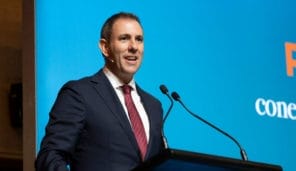

You might have thought that at some point over the course of eight hours a room filled with 160 or 170 financial planning practice principals and owners might have veered off into a conversation about the impact of the latest legislative changes or the regulator’s most recent banning of an authorised representative. But you’d be wrong.
At the Professional Planner|Financial Planning Association Best Practice Forum last week the focus remained firmly fixed on the issue of running great businesses and delivering great advice.
From the importance of basic business planning, to the advantages that flow from having a coherent business philosophy; from the role of technology in creating great client experiences to how technology enables business owners to turn ideas into results; from the constructive use of adviser rating services to the benefits of recruiting graduate financial planners; and from tapping into big data to make better decisions to tapping into referral partners to find new clients, the conversation didn’t once delve into the issues that – if you were to glean your insights only from websites and emails – often pass these days for what’s important.
It was a timely reminder that the most successful businesses know what they stand for, know where they are going, and know how they’re going to get there. Short-term issues are often important and must always be managed, but (to mix a metaphor) if you spend too much time listening to the noise it’s easy to lose sight of the big picture.
No news is good news
And the big picture is pretty clear. More people today than ever before need access to top quality financial advice, provided by highly professional practitioners. But tomorrow that number will be greater, and it will be greater again the day after.
The fundamentals remain sound for financial planning as an occupation and as a profession, and the advice businesses that succeed will be those that keep that in mind, and which remain focused on quality and professionalism, even as the potential to be distracted and disheartened by the banal grows ever greater.
At another event recently, the sheer volume of what passes as “news” these days was described as “a torrent of drivel”. Within that colourful if slightly grotesque description is a perceptive (if soggy) truth.
How quickly do you need to know that ASIC has again banned someone from financial services – does it warrant a “breaking news” email clogging up your inbox? Fund manager XYZ adds a distressed emerging markets debt option to its funds line-up. Do you need to be distracted from your work to be told that? A quick review of the mail that landed in the inbox last week revealed that more than 80 per cent of the “news” content was really nothing more than often only mildly reheated press releases. Disappointingly, it was produced by the so-called “trade press” which, notionally at least, ought to understand financial planners and their needs and interests better than the mainstream press does.
‘Drivel’ not allowed
If you’re happy to exist on a diet of what the product manufacturers and service providers want to tell you, and if you don’t want to do anything to stop becoming increasingly frustrated and dispirited every time ASIC bans yet another planner, then fine. But you don’t have to be happy with it – there’s more to life than that.
The opportunity to raise the issue of “news” providers is only a very happy by-product of a broader point. It’s never been more important to be discerning about what is and is not important, to be able to separate the genuine insights from mere information and, more importantly to avoid being deluged by the torrent of drivel.
That much became crystal clear during the Best Practice Forum. Over the course of the day, practitioners and session leaders navigated the issues that really matter to everyone who wants to create a great financial planning business and deliver the best possible advice and experience to clients. There wasn’t even a rivulet of drivel.
The Professional Planner|Financial Planning Association Best Practice Forum was sponsored by Centrepoint Alliance, Colonial First State, Enzumo, HUB24, IRESS, RoboDirect, TAL and Vanguard. Its session partners were Business Health and PortfolioConstruction Forum. The event partner was the Financial Planning Association (FPA).