
I appreciate Professional Planner‘s ongoing coverage of critical issues in the financial advice and investment research sector, including Generation Development Group CEO Grant Hackett’s recent article published on 27 November 2025. Hackett’s piece thoughtfully highlights the growing importance of robust research amid high-profile failures like the collapses of the Shield Master Fund and First Guardian Master Fund. However, while I concur with the core premise that enhanced research is vital for protecting investors and advisers, I must address what in our view are omissions from the article.
These points merit clarification to foster a more complete dialogue. First, Hackett’s assertion that there are only three major research houses in Australia overlooks key players in the landscape. In reality, there are at least four prominent firms providing comprehensive ratings and analysis: Lonsec, Zenith, Morningstar, and SQM Research. If we include Mercer, which offers extensive investment consulting and research services, the count rises to five. This broader ecosystem of research is essential to recognise, as it underscores the diversity of options available to advisers – each with varying methodologies, coverage, and strengths. Dismissing SQM or Mercer risks underrepresenting the competitive dynamics that drive innovation and accountability in research.
We should also acknowledge smaller researchers with specialty niches who have a role to play in our industry, such as Core Property, Evergreen, Foresight Analytics, Genium Investment Partners, and Research IP. That said, I strongly align with Hackett’s call for expanded research coverage, particularly in areas that have been historically underserved. The article rightly notes the vulnerabilities exposed by recent events; however, more must be done to extend due diligence to platforms offering superannuation products as well as investor directed portfolio services (IDPS) products. These platforms, which allow investors to hold a wide array of assets under a single structure, often escape the same level of independent evaluation as traditional managed funds.
As investor preferences shift toward customised portfolios, research houses should prioritise developing frameworks to assess IDPS for liquidity risks, operational integrity, and alignment with client outcomes. This would not only mitigate blind spots but also empower advisers to make more informed recommendations. If the current trend of sharply reducing products from super wrap platforms continues, greater attention will undoubtedly turn to IDPS offerings.
A more pressing concern, however, is the structural evolution of some research houses themselves. Hackett’s piece does not delve into the potential conflicts of interest arising when research providers, such as Lonsec and others, expand into fund management. By operating as both raters and managers, these firms create inherent tensions: How can investors trust ratings that might indirectly favor in-house products? This model contrasts sharply with more pure-play research houses that maintain independence by avoiding asset management altogether.
The industry would benefit immensely from greater emphasis on – and perhaps incentives for – research providers that remain relatively unconflicted, ensuring objectivity and reducing the risk of biased analyses that could exacerbate investor harm.
While this was not the direct issue for Shield and First Guardian, such research/funds under management (FUM) models still represent a risk for the industry and are not without historical precedent, as van Eyk/Blueprint demonstrated. Not to mention, ASIC has made recent statements expressing concern over providing research while simultaneously running models.
Nevertheless, the collapses of Shield and First Guardian raise profound questions about the role of research houses in fraud detection and due diligence. Who bears primary responsibility for uncovering fraudulent activities: research houses, regulators like ASIC, trustees/platforms, auditors, the advisers themselves? Or all of the above?
In the case of Shield/First Guardian, allegations of misappropriated funds, boiler room marketing tactics, and inflated valuations are at the forefront of these events. Without the fraud – which appears to have involved illegal siphoning of reserves to certain advisers and subsequent escalation – we would not be having this conversation today.
Both funds failed primarily due to fraudulent activities.
This begs the question: How much due diligence should research houses perform to detect such fraud? Is it feasible for the industry to require verification down to the paper trail of receipts, which, having being on the front line of this event, would have been necessary to uncover the alleged issues here? If it is determined that research houses and platforms must conduct such in-depth checks, it remains unclear how this can be done cost-efficiently.
I am not aware of any platform, trustee, or research house that currently performs or plans to perform due diligence at this level. This is more appropriately the domain of auditors, and ongoing investigations may clarify their accountability in these cases.
From a research house’s perspective, however, there are steps that can be taken to minimise the risk of similar events recurring. Greater caution around internal service providers is one measure – both funds had internal responsible entities that reportedly provided misleading or fictitious performance data to stakeholders. Enhanced physical verification of certain assets can also be implemented efficiently.
These are some of the actions we as a research house are taking among other initiatives. Obviously, we are very keen to never go through such an event again and doing whatever can be done to ensure that. However, I have concern the risks of a future fraudulent event cannot be entirely eliminated altogether.
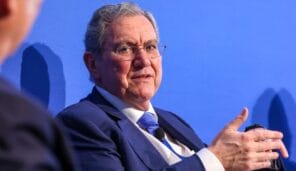
Louis Christopher is owner and managing director of SQM Research.
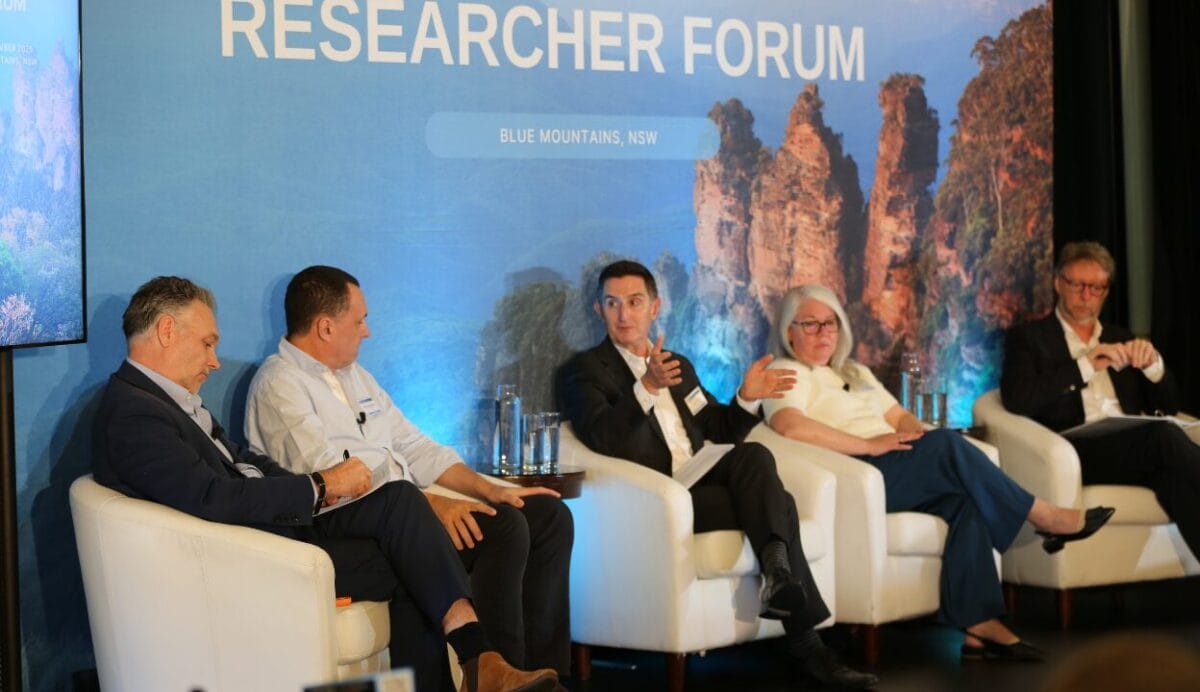
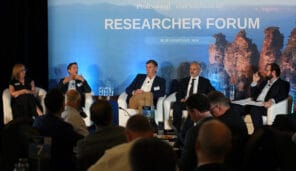
Editor’s note: Professional Planner will be hosting the Researcher Forum on 2-3 December 2025. Christopher was due to speak the event but has withdrawn following ASIC’s legal action against the firm.