

 Martin Mulcare says the way you charge for your services should reflect the value of those services, not some unrelated measurement.
Last month I addressed the question of when is the best time to quote your fees. This month, prompted by the animated discussion about asset-based fees, I would like to take up the challenge of considering what to quote. It is tempting to respond to a number of the controversial tangents that advisers and commentators have pursued in the name of “asset-based fees”, for example:
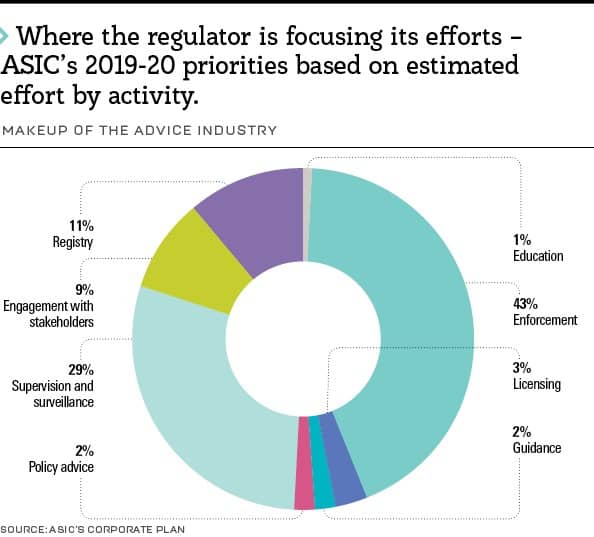
• ASIC’s right to regulate the method of charging for advice;
• The impact on the revenue and/or business value of an advice business;
• The potential for conflict of interest posed by asset-based fees;
• The differentiation between how to collect fees and how to quote fees;
• How it might be possible to set “dollar-based” fees.
Let’s put all of these aside for a moment and approach the discussion through one fundamental question: What do you do for your clients?
If your answer is along the lines of “investment advice”, then go right ahead and quote your fees on the basis of the volume of assets under your advice. But please don’t masquerade as a financial adviser.
If your answer is along the lines of “providing a road map for people to achieve their financial objectives”, then I suggest that the appropriate basis for your fees is to charge for the “road map” – that is, the plan you provide. And please feel free to call yourself a financial planner, but not an adviser.
If, however, you genuinely believe that you solve (or even help solve) the financial challenges that your clients encounter during a long and trusted relationship, then an asset-based fee is completely inconsistent with that proposition. Authentic financial advisers are providing their clients with valuable outcomes such as “time”, “peace of mind”, “confidence” and/or “financial freedom”. I don’t believe that has got anything to do with the volume of assets that the client owns. I accept that it is not necessarily easy to put a price on those outcomes, but that’s not a good reason to adopt a poor proxy.
This isn’t just a question of a theoretical link between your fee basis and your client value proposition (CVP). It drives to the core of what you do in practice to help your clients. In my experience, some of the most stressful financial decisions that clients face include:
• Upgrading their family home;
• Changing their career path;
• Setting up a new business;
• Funding the education ambitions of their children;
• Deciding the right aged care accommodation for their frail parents;
• Re-setting financial goals and budgets after a divorce settlement;
• Affording their desired post-retirement lifestyle;
• Determining who gets what after they die.
Forgetting about the adviser’s preference, why would an asset-based fee make any sense to a client who is seeking guidance on any of these tough decisions? You are in fact diminishing the validity of your CVP in the mind of your client by adopting an inconsistent charging mechanism.
Of more concern to me, however, is the impact on the adviser’s mindset if their fee is asset-based. I suspect that many advisers with a funds-under-management (FUM) mentality are not actively addressing the real financial worries that their clients experience, such as the examples listed above. If you don’t believe me, I suggest that you review your client list and check what percentage of your clients have sought your advice with regard to purchasing a home – the largest single financial commitment for most of your clients. If it is less than 50 per cent, and you still think that you are a financial adviser, you might review your CVP against your clients’ perception – as well as review your pricing model.
These are the best of times to position yourself as a trusted adviser and help your clients make smart financial decisions across all aspects of life, not just investments. If you can make that step, then the decision to ditch asset-based fees is an easy one.
PS We should remind readers that we at Strategic Consulting & Training DO NOT advocate hourly rates but job rates. A full guide to pricing financial advice is available in Jim Stackpool’s book, What Price Advice.
Martin Mulcare can be contacted on martin@scat.com.au
















Leave a Comment
You must be logged in to post a comment.